

Bern keeps eleven Renaissance figure fountains in its Old Town. This article tells their history, from the Stadtbach of 1191 to the four fountains you should see. Where to refill, whether every fountain carries drinking water and where the water comes from is in our guide to drinking water in Bern.
Why is Bern the fountain capital?
Because Bern never replaced its fountains, it kept building on them. The water supply was planned from the founding of the city in 1191. The Stadtbach was led from the Wangental into the city and ran down the middle of the main streets. It supplied crafts and firefighting and carried waste away, but nobody drank from it.
Drinking water came from draw wells and a few spring fountains. After the hot summer of 1395 the groundwater was no longer enough, and Bern built wooden pipe fountains with running water, fed from springs outside the city. At the end of the 14th century the city chronicle counted five running fountains.
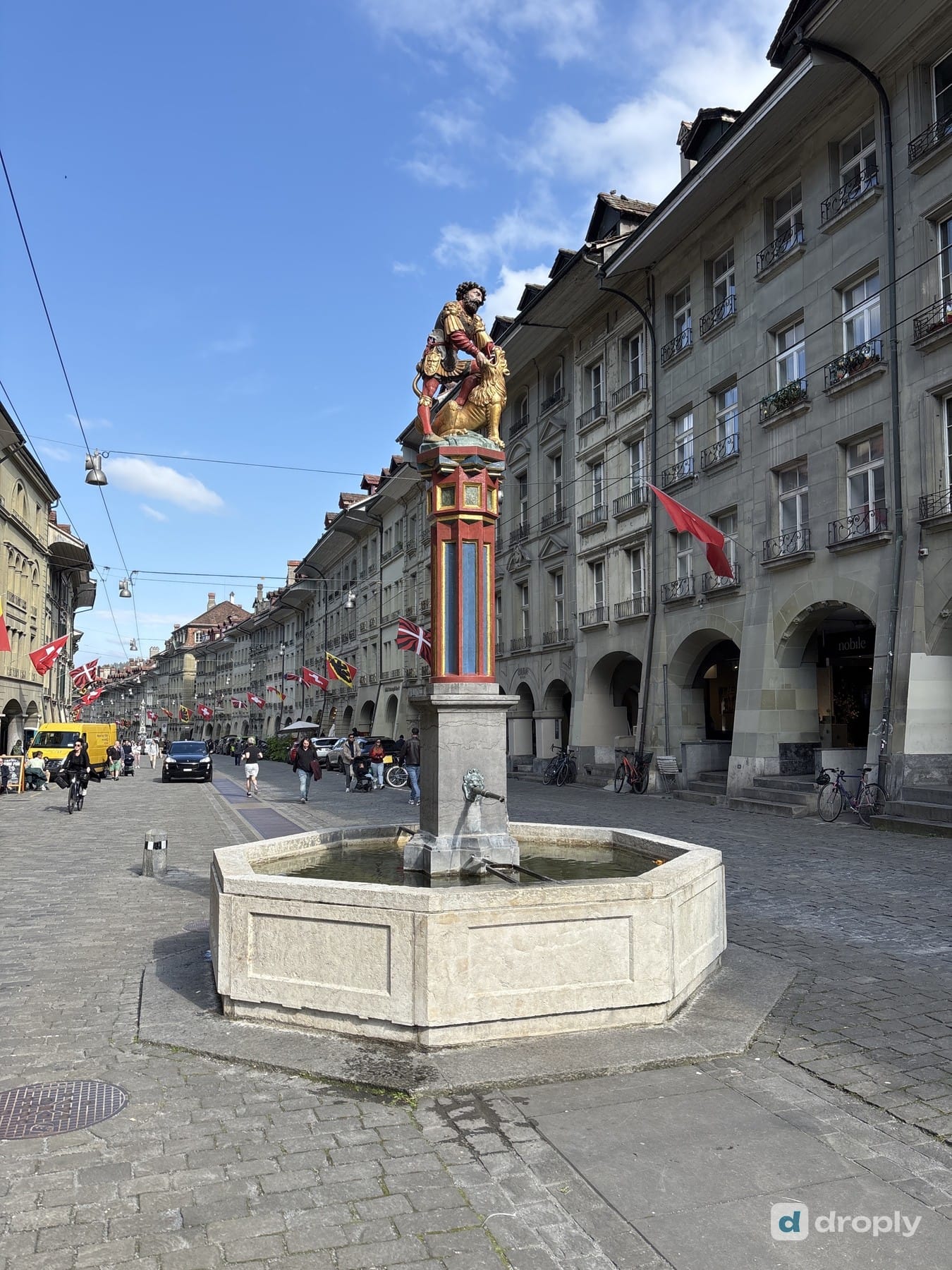
The decisive push came a good 150 years later. From 1520 the first stone fountain was built on Kreuzgasse, and between 1542 and 1546 Bern replaced almost all wooden fountains with stone ones with a figure on a column. Most of these figure fountains were made by the Fribourg sculptor Hans Gieng or his workshop. Eleven of them still stand today, many with copies in place of the originals, which are kept in the Bern Historical Museum.
If you want the history behind it, Bern Welcome offers the city tour All about water. It’s a walk through the Lower Old Town to selected fountains and into the cellar of the State Chancellery. There you see the Lenbrunnen, the oldest cistern of the city, which is otherwise not open to the public.
Summary: Bern planned its water supply from 1191 and between 1542 and 1546 replaced almost all wooden fountains with stone figure fountains, most of them from the workshop of Hans Gieng. Eleven still stand today.
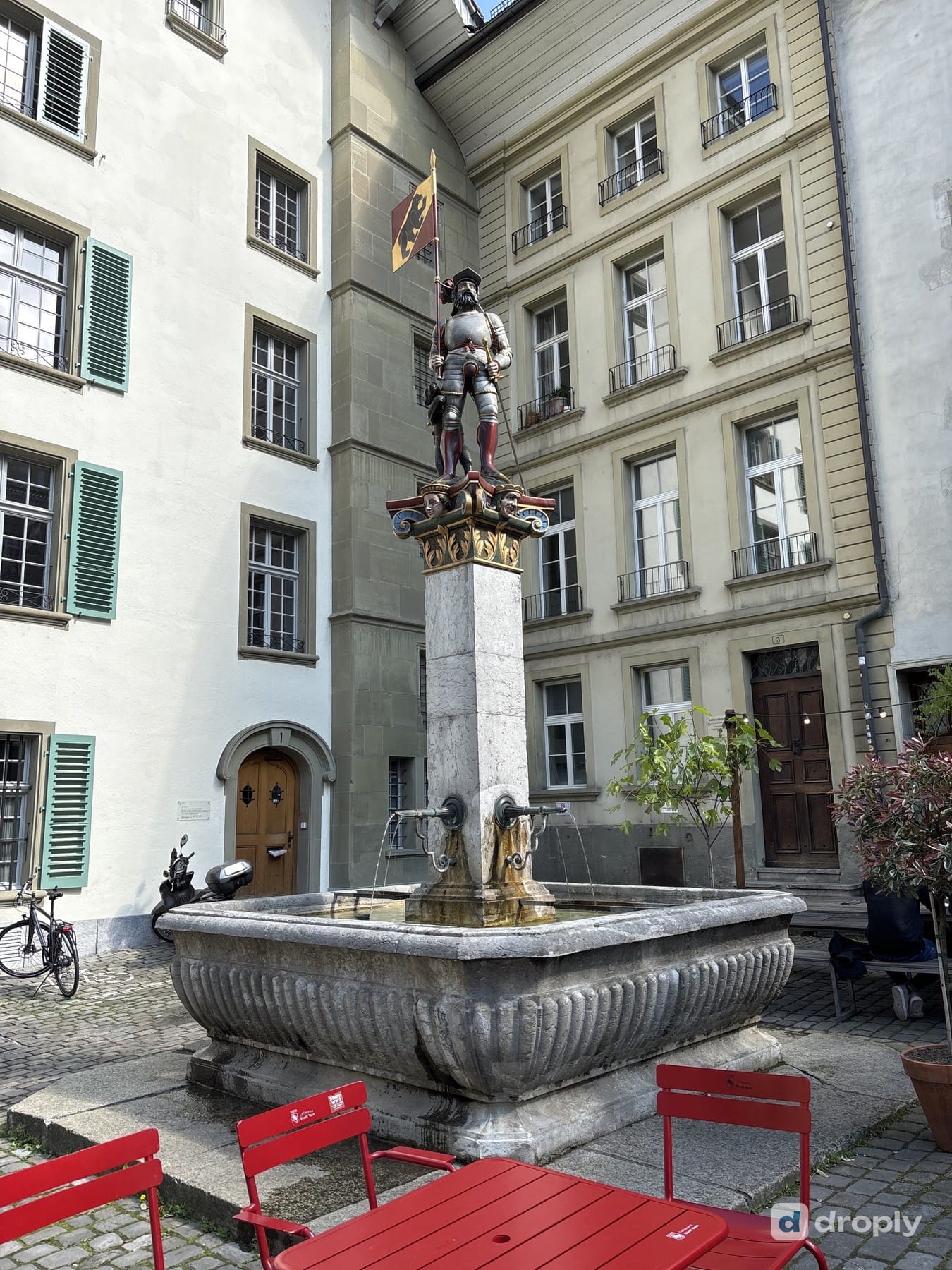
Which four fountains in Bern should you see?
The Kindlifresser, Moses, Zähringer and Gerechtigkeit fountains. They all stand in the Old Town and together cover the founding of the city, the Reformation, the rule of law, and a figure nobody can explain to this day.
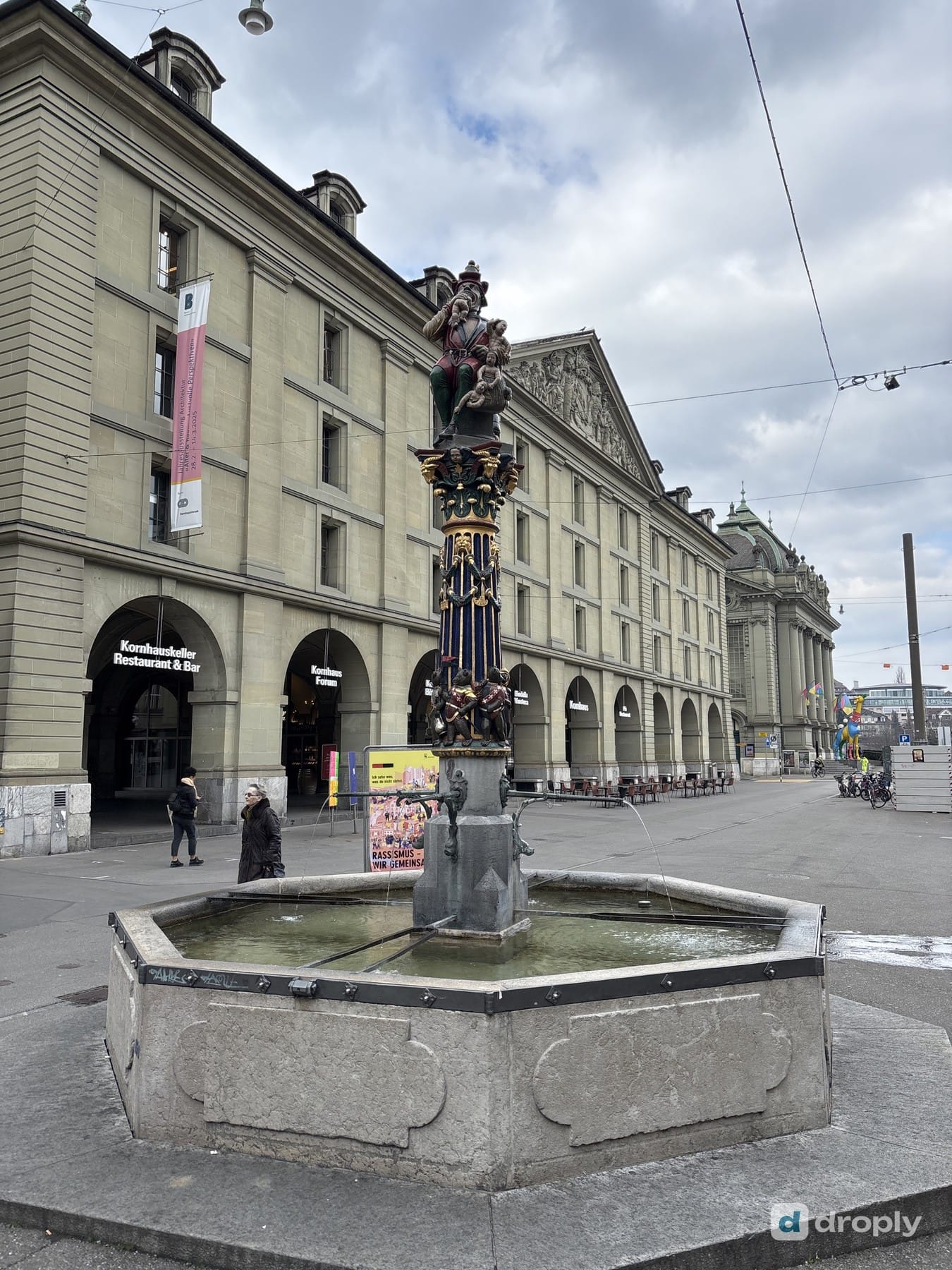
Kindlifresserbrunnen, Kornhausplatz
The best-known and most uncanny fountain of the city, built in 1545/46 to replace a wooden predecessor. The figure is a seated ogre eating a naked child, with more children in his sack. It was originally just called Platzbrunnen, the current name is documented only from 1666.
Hans Gieng left not a line about what the figure means and who ordered it, so many readings circulate: a carnival figure, the child-eating god Kronos, the brother of the city founder, or simply a scare figure for disobedient children. None of them is proven. The fountain runs and carries drinking water, even if most people stop in front of it to take photos rather than to refill.
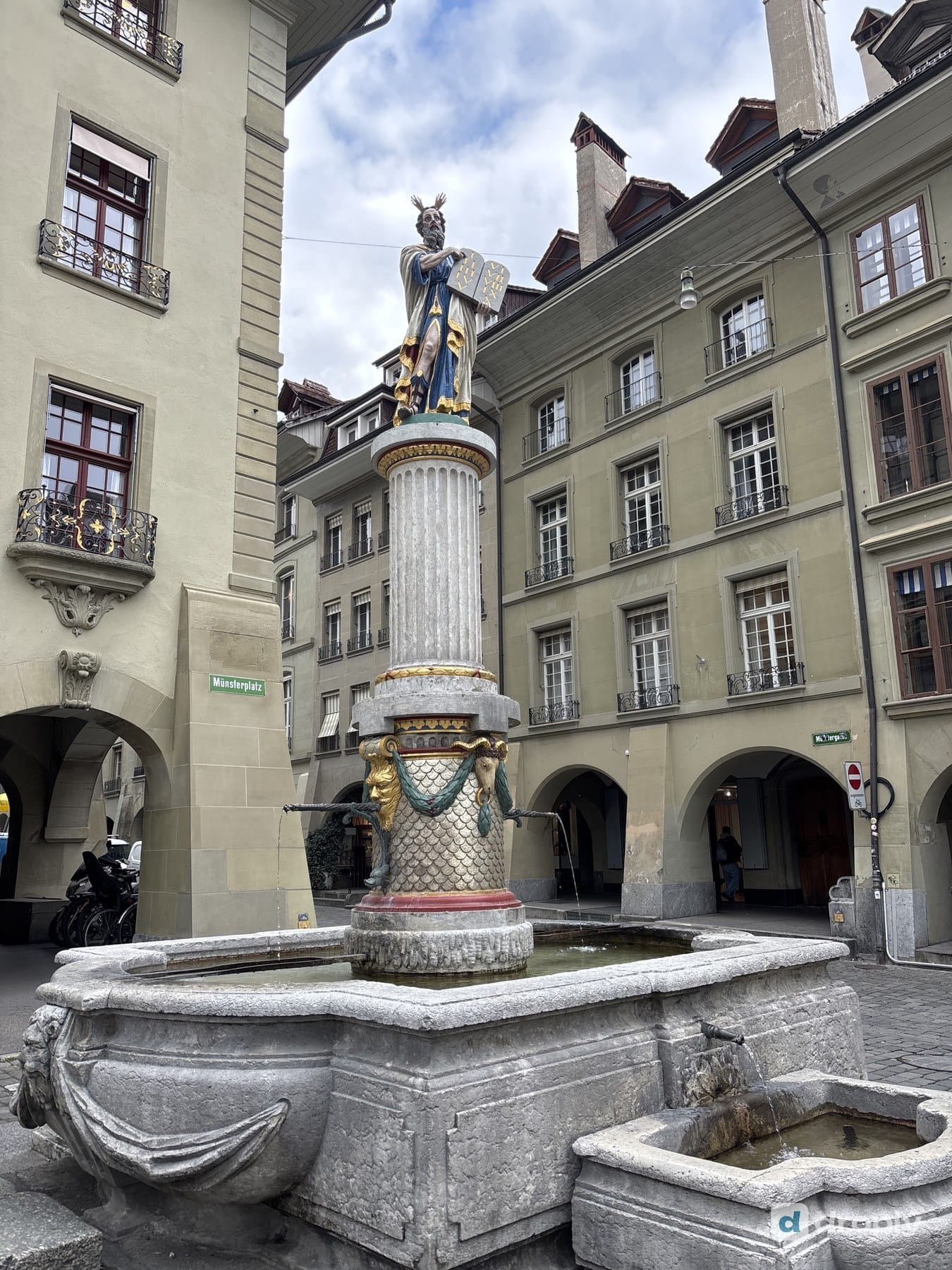
Mosesbrunnen, Münsterplatz
The Moses fountain stands directly in front of the Bern Minster and is a Reformation statement in stone. Moses holds the two tablets of the law in his left arm and points with his right hand at the second commandment, the ban on images. On the square in front of the largest church in the city, in a Bern that has been Protestant since 1528, the gesture was deliberate.
The current fountain is from 1791. Trough and column probably go back to Niklaus Sprüngli, the figure was made by Nikolaus Sporrer from Konstanz. A first Moses fountain stood here in 1544, its figure was so weathered by 1740 that it was removed.
Zähringerbrunnen, Kramgasse
The founding legend of Bern as a fountain figure. On the column stands a bear in full armor, with the shield and banner of the Zähringer lion, and a bear cub at his feet. It stands for Berchtold V of Zähringen, who founded the city in 1191. Legend says he named the city after the first animal he killed, a bear, hence Bern.
The fountain was built in 1535, so it is older than the Gieng series, and was made by Hans Hiltprand. It stands on Kramgasse below the Zytglogge, which makes it a popular photo spot: tower and bear in one picture. Walking down Kramgasse, you quickly pass the next fountain.
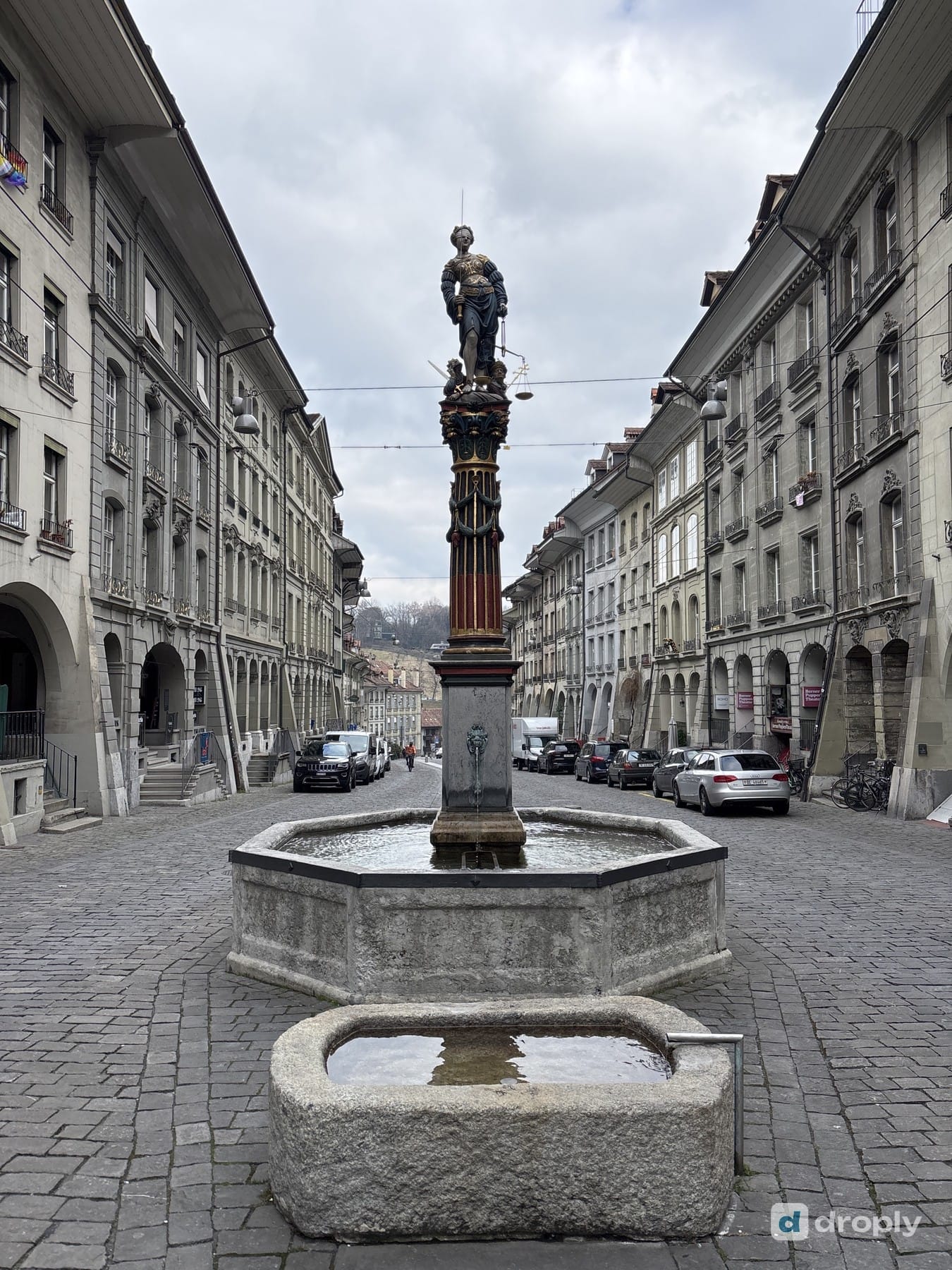
Gerechtigkeitsbrunnen, Gerechtigkeitsgasse
Justitia with sword and scales, and, unusual for 1543, with a blindfold. This blindfold later became the standard symbol of impartial justice, and here it is one of the early examples. At Justitia’s feet sit four busts of rulers with closed eyes: pope, emperor, sultan and Schultheiss, so theocracy, monarchy, autocracy and republic, all subordinate to justice.
On 13 October 1986 the figure was pulled down with a rope and tackle and badly damaged, attributed to the Jura separatist group Groupe Bélier. The original has been in the Bern Historical Museum since then, and a copy has stood on the column since 1988.
Summary: The Kindlifresser, Moses, Zähringer and Gerechtigkeit fountains all stand in the Old Town and together tell the founding, the Reformation and the legal understanding of Bern. All four carry drinking water.
How do you do your own fountain tour in Bern?
On foot along the Old Town axis, with droply on your phone. The eleven historic figure fountains lie almost all on one axis, from Spitalgasse via Marktgasse and Kramgasse to Gerechtigkeitsgasse. It is a walk you can do in half a day, with photo stops and refills. You need no guide and no opening hours.
In droply you find the fountains on the map, and for most Bern fountains the story is there too: year of construction, figure, origin of the name. You tap the fountain in front of you and read what you are looking at, instead of learning a list beforehand. If you want to contribute, add a photo or report whether a fountain is running. That is how the data grows.
Where to refill on the way, and which fountains carry no drinking water, is in our guide to drinking water in Bern.
Where does the name Glasbrunnen come from?
Three legends offer an explanation. The Glasbrunnen is a captured forest spring in the Bremgartenwald, and since May 2024 a sign says its water should no longer be drunk. The legends around its name are much older. One tells of a man who made a garden with a crystal fountain for his beloved. She demanded a castle on top and in the end got nothing, and since then she has to draw water for passersby on some nights. Another traces the name to Magdalena Nägeli, daughter of the Bernese Schultheiss Hans Franz Nägeli. A third suspects a medieval glassworks or Celtic glass beads behind it.
Whether the Glasbrunnen is still worth a walk is in our guide to drinking water in Bern.