


· Micha
How Much Water Do You Really Need When Hiking? A Practical Guide
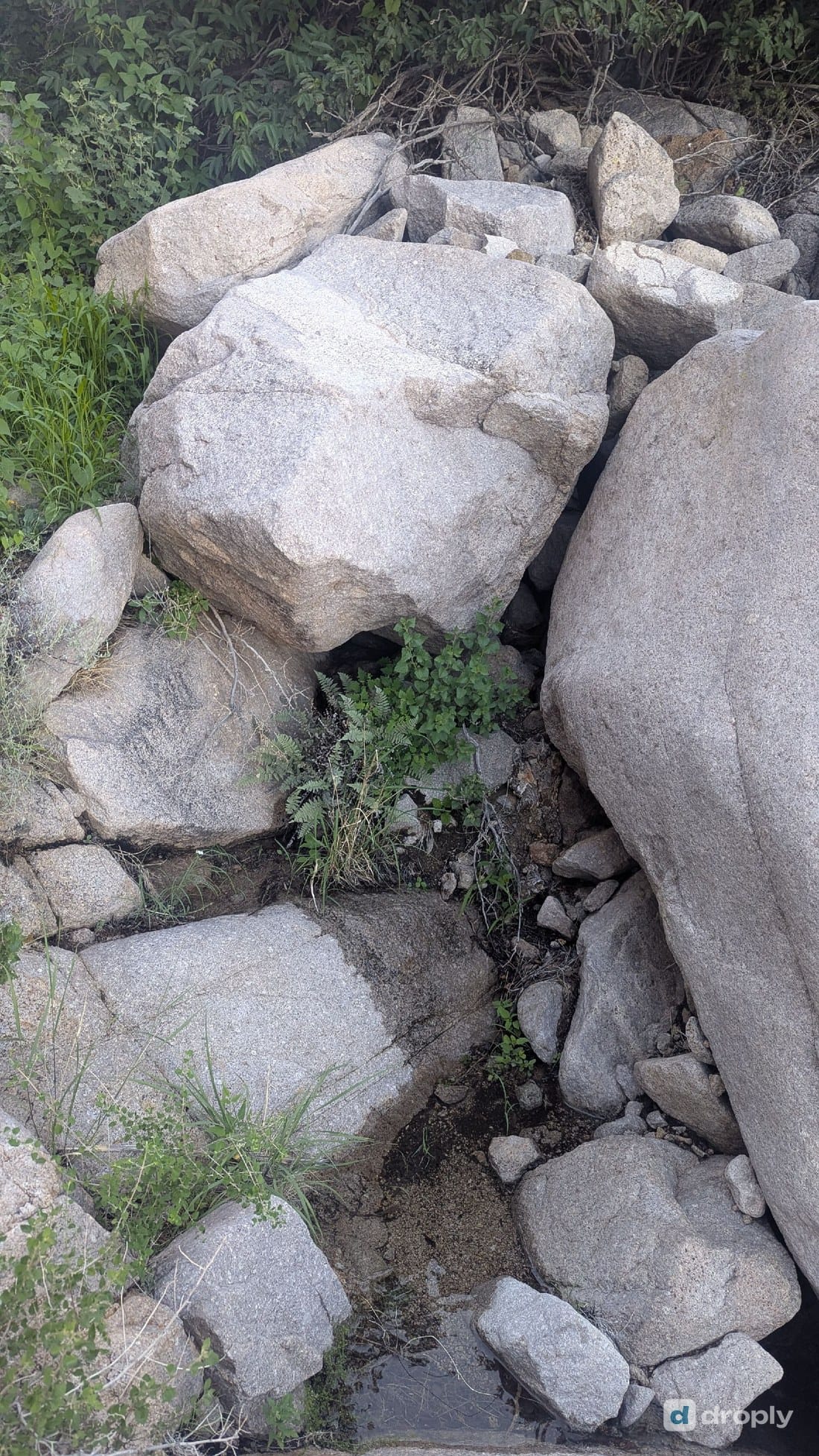
The amount of water you drink on a hike and the amount you need to carry are two different numbers. How to plan around the longest dry stretch instead of the whole route, and why the water sources on your map aren't guaranteed to be flowing.
The amount of water you carry on a hike isn’t the same number as the amount you drink, and mixing the two up is what makes people overpack.
Before the Continental Divide Trail, I did what a lot of first-timers do: I looked at a six-hour day, guessed at total consumption, and carried for the whole thing. I started at the Mexican border with six litres. About two miles in, I dumped half of it. My pack was so heavy I could barely move, and it was obvious I’d packed for my fear of running dry, not for the actual water situation on the ground.
The real question isn’t “how much will I drink today.” It’s “how much do I need to carry until my next reliable refill.” Those are different questions with different answers, and the gap between them is exactly the weight you’re carrying for no reason.
The amount of water you need to carry is determined primarily by the longest dry stretch on your route, not by the total length of the hike.
How much water do you actually drink while hiking?
There’s no fixed number, because consumption depends on heat, humidity, elevation, pace and how hard you’re working, not on distance walked. Wilderness medicine guidance recommends drinking to thirst rather than a fixed schedule, and as a rough planning range, many hikers land somewhere around 0.4 to 0.8 litres per hour in moderate conditions, more in heat, less on an easy, cool trail.
That’s a planning range, not a target to hit. We cover the full picture, including why forcing a fixed liters-per-hour schedule can backfire, in our hydration guide. This article assumes you roughly know your own consumption and focuses on the separate question: how much of that do you actually need to carry at once?
Summary: Drinking needs vary with conditions, not distance. Use a rough hourly range as a planning input, and read the hydration guide for the full picture on how much to drink.
Drinking vs. carrying: why they’re different numbers
Say you’re out for six hours and drink half a litre an hour: three litres total. If there’s no water anywhere on the route, you carry close to all three litres from the start, plus a reserve. If there’s a reliable source at the halfway point, you only need to carry enough for the first three hours, roughly 1.5 litres, refill, then carry the same again for the second half.
Same hike, same total consumption, half the peak weight on your back at any one time. That’s the whole mechanism: water availability along the route changes how much you carry, even though it changes nothing about how much you drink.
Stretch that logic further and a single reliable source in the middle of a dry hike can save you a kilogram or more of carried weight, water weighs almost exactly one kilogram per litre, without changing your hydration at all. This is the lever that actually reduces pack weight on a hike with real water sources: not carrying less water overall, but carrying it in smaller batches between refills.
Summary: Your total drinking doesn’t change based on refill points, but your peak carried weight does. A source at the right point in the route can cut what’s on your back by half.
The formula: plan for the longest dry stretch
Water to carry = expected consumption during the longest dry stretch + a safety margin.
In practice:
- Estimate your rough hourly consumption for the conditions you’re expecting.
- Map the water sources along the route.
- Find the longest gap between sources.
- Judge which of those sources are actually reliable, not just marked.
- Calculate the water needed to cover that longest reliable gap.
- Add a margin for heat, difficult terrain or uncertainty.
- Carry that. Refill at each reliable source instead of hoarding for the whole day.
Distance alone doesn’t tell you this. A 30 km hike with a source every 5 km needs less carried water at any point than a 15 km hike with nothing along it at all. The number that matters is the longest single gap, not the sum of the route.
Picture it as a line: START → 3h → water → 3h → FINISH needs roughly half the peak carry of START → 6h dry → water, even though both are six-hour hikes with identical total consumption.
Summary: Size your carry to the longest dry stretch, not the whole route. A hike with frequent water can need less carrying than a shorter one with none.
What happens if you don’t drink enough water?
Early dehydration shows up as thirst, a dry mouth, headache, fatigue and reduced performance, then progresses to dizziness, weakness and difficulty concentrating as it worsens. CDC guidance on heat-related illness describes heat exhaustion as heavy sweating, nausea, weakness and a rapid pulse, driven by combined water and electrolyte loss.
Left unaddressed, especially in heat and under exertion, this can progress toward heat stroke: confusion, loss of coordination and a body that stops regulating its own temperature, a medical emergency. The 2024 update to the Wilderness Medical Society’s heat illness guidelines treats this as a spectrum, not a single event, which is why catching the early signs matters more than reacting to the late ones.
This is exactly why dehydration is more dangerous on remote trail than in a city: the same symptoms that are an inconvenience near your car become a real problem when the nearest water and the nearest help are both hours away.
Summary: Dehydration starts as thirst and fatigue and can progress to heat exhaustion and, in serious cases, heat stroke. Remote terrain removes the safety net a city walk still has.
Can you drink too much water?
Yes, and it’s a real, occasionally fatal risk, not a theoretical one. Exercise-associated hyponatremia (EAH) happens when you drink more fluid than your body can excrete, diluting blood sodium below the normal range. It’s not simply “not enough electrolytes”: it’s an excess of water relative to what the kidneys can process during prolonged activity.
Symptoms overlap uncomfortably with dehydration at first: headache, nausea, confusion, weakness, which is part of what makes it dangerous. People who feel bad and assume it’s from too little water sometimes respond by drinking more, making it worse. Severe cases can progress to seizures and coma. It’s been documented in hikers, not only in marathon and ultra-endurance athletes.
More water is not automatically safer. The practical guard against it is the same advice as for underdrinking: drink to thirst rather than forcing a fixed volume, and don’t treat “drink constantly” as a blanket safety rule.
Summary: Overdrinking dilutes blood sodium and can be serious or fatal. It isn’t rare or theoretical, and forcing more water than you need doesn’t make you safer.
Water isn’t just water: quantity, biology, and chemistry are three different questions
How much you carry, whether a source is biologically safe, and whether it’s chemically clean are three separate questions, and it’s easy to answer only the first one and assume the other two are fine because the water looks clear.
Mineral-rich water, tap water, springs, streams, lakes and snowmelt aren’t interchangeable just because they’re all “water.” The next few sections look at what actually differs between them.
Summary: Finding enough water, finding biologically safe water, and finding chemically clean water are three separate problems. Solving one doesn’t solve the others.
Is mineral-rich water better for hydration?
Not automatically. Mineral content, calcium, magnesium, sodium, varies a lot between natural sources, and having more minerals doesn’t by itself make a source better for ordinary hydration. For typical day hiking, there’s no reason to seek out heavily mineralized water specifically for hydration.
Where it does matter is electrolyte replacement on long, hot, sweaty days: prolonged exertion can mean significant sodium loss through sweat, and sports medicine guidance recommends sodium in fluids for exercise lasting over an hour, both for palatability and to help prevent hyponatremia in people drinking large volumes. But hydration and electrolyte replacement aren’t the same thing, and mineral water alone isn’t a substitute for a deliberate electrolyte strategy on a genuinely long, hot day. If that’s your situation, an electrolyte supplement with a known sodium content is a more reliable plan than hoping a spring happens to be mineral-rich.
Summary: Mineral content doesn’t make water better for ordinary hydration. On long hot days, sodium matters, but plan it deliberately rather than relying on a source’s natural mineral content.
Is snowmelt safe to drink?
Not automatically, and clear, cold and remote doesn’t mean chemically pure. Snow accumulates whatever settles out of the atmosphere over it, and that can include persistent environmental contaminants. Research on PFAS in snow, the “forever chemicals” that don’t break down naturally, has found measurable concentrations even at remote, high-elevation sites far from any obvious local source, carried in by atmospheric deposition. Ski areas add a local source on top of that: PFAS compounds consistent with ski wax have been found in nearby snowpack.
To be precise about what this does and doesn’t mean: snowmelt doesn’t automatically contain PFAS, and it isn’t automatically unsafe. What’s true is narrower and still worth acting on: snowmelt can carry environmental contaminants, PFAS are persistent and have turned up in snow in places with no obvious source, and looking pristine tells you nothing about chemical content one way or the other. If a known reliable water source is available, don’t default to snowmelt just because it looks like the purest option in view.
This is also a case where a standard filter genuinely does not help. Backpacking filters are built to strain out bacteria and protozoa by pore size; PFAS removal needs a different kind of treatment entirely, activated carbon, ion exchange, or reverse osmosis, which is what water utilities actually use to meet PFAS limits. Don’t assume your hiking filter is doing anything about chemical contamination just because it’s doing something about biological contamination.
Summary: Snowmelt can carry environmental contaminants like PFAS, even far from an obvious source, and a normal hiking filter does nothing about them. Looking pure isn’t evidence of being pure.
Is stream and spring water safe to drink untreated?
No, not as a default. Clear mountain water can carry bacteria, protozoa and, depending on context, viruses, picked up from wildlife, livestock, agriculture, mining or other human activity upstream, none of which are visible to the eye. We cover this in more depth, including why my filter setup on the CDT changed over five months, in the hiking water filter guide; here’s the short version of the hierarchy I actually used:
- Known safe treated water (tap, refilled from a verified source) beats everything else.
- A known reliable natural source, treated, is next.
- An unknown natural source gets treated before you drink it, every time.
- A source that looks contaminated, unusual staining, sits below livestock or old mine workings, gets skipped if any safer alternative exists.
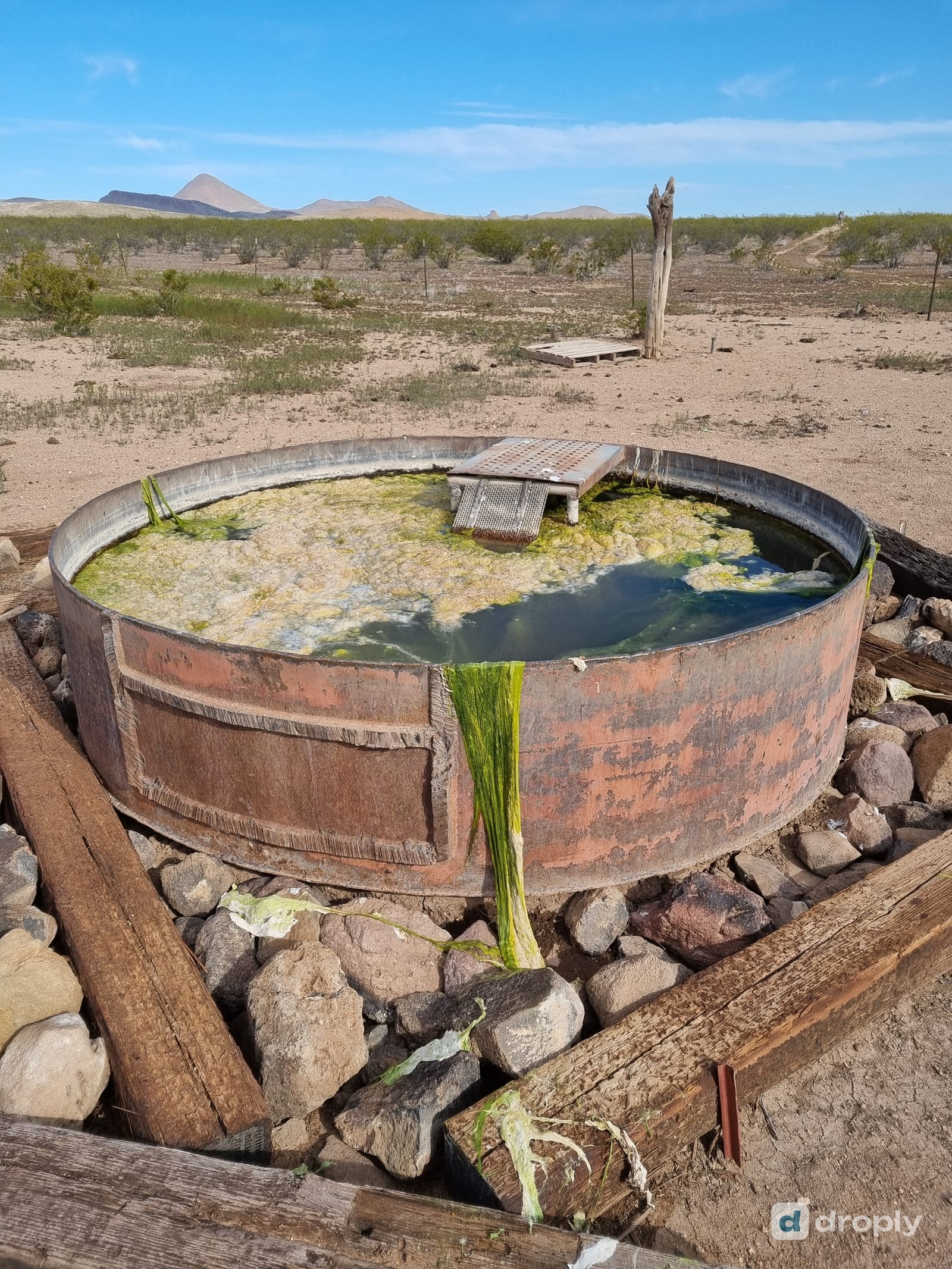
A filter solves the biological side of this. It doesn’t solve every possible chemical issue, the same limitation as with snowmelt: don’t over-credit a filter for problems it was never built to catch.
Summary: Treat every natural source you’re not certain about. A filter handles bacteria and protozoa, which cover most backcountry risk, but not every possible contaminant.
How do you know if a water source is actually reliable?
This is the real planning problem, and it’s not the same question as “where is the water.” A source marked on a map can be a seasonal spring that’s dry by the time you arrive, a creek that’s stopped running, a broken fountain, a closed tap, or a source that’s simply changed since whoever mapped it was last there. Drought and an unusually hot season can dry up something that was flowing reliably last year.
The question that actually matters is: will there be water when I get there, not just where is it marked. That depends on the source type (a piped spring behaves differently than a seasonal creek), how recently someone reported on it, and whether the season supports it right now. A single old data point on a map answers none of that.
Summary: A marker on a map tells you where water might be, not whether it’s there now. Recency and source type matter more than the pin itself.
Plan your water stops with the droply Water Navigator
This is exactly the gap we built the droply Water Navigator to close: current information about the water along a route you’re already planning, not just a static pin on a map.
The workflow:
- Open your route in droply.
- See the water sources along it, not just near your start and end points.
- Check what’s known about each one: source type, and recent reports from other hikers when available.
- Spot the refill opportunities you can actually count on.
- Look at the distances between sources.
- Identify the longest dry stretch on your specific route.
- Size how much you carry to that stretch, using the formula above.
START → 💧 → 💧 → 14 km DRY → 💧 → FINISH
Longest dry stretch: 14 km. That’s the number that sets how much you carry, not the total route length, and it’s the number the Navigator surfaces before you ever put your boots on.
We’re not going to tell you the Navigator hands you an exact liters figure, it doesn’t, and we’d rather be precise about that than oversell it. What it gives you is the water picture along your actual route: where the sources are, how far apart they are, and what’s known about them, so you can run the formula yourself instead of guessing at a worst case. Know where your next water is before you need it.
Explore the droply Water Navigator
Summary: The Navigator surfaces the water sources, gaps and recent reports along your own route, so you can find your longest dry stretch instead of guessing at one.
How much water should you carry, by hike type
There’s no single number, but the shape of the planning problem shifts by hike type:
- Short day hike (1 to 2 hours). Water is usually frequent and planning is simple. Carry enough for the outing plus a small margin.
- Full-day hike (5 to 8 hours). The longest dry stretch starts to matter more than the total. Don’t default to carrying the whole day’s theoretical consumption at once if there’s a source partway through.
- Hot or exposed hike. Consumption goes up, heat stress goes up, and a dry or unreliable source becomes a bigger problem. Build in a larger margin.
- Multi-day hike. Now it’s a refill strategy across camps and dry stretches, with backup sources identified in case a primary one is dry.
- Long-distance or thru-hiking. Water planning becomes real logistics. This is where minimizing unnecessary carried weight and having current source information pays off the most, because you’re repeating the calculation daily for weeks or months.
Summary: The planning problem scales from “barely think about it” on a short hike to “a daily logistics exercise” on a thru-hike. The formula stays the same; what changes is how much it matters to get right.
When should you carry extra water?
Add margin, beyond the bare formula, when:
- It’s genuinely hot, or the route has little shade.
- The terrain is difficult or the climbing is steep, which slows you down and raises consumption.
- Your pace is likely to be slower than planned.
- The next source is seasonal or otherwise uncertain.
- The backup source, if the primary is dry, is a long way off.
- You’re camping dry overnight, or hiking somewhere remote where a mistake costs more to recover from.
The underlying principle: if the next source is uncertain, plan for the next reliable one, not simply the nearest one on the map. A source you can’t trust doesn’t count toward your plan.
Summary: Add margin for heat, terrain, pace, and uncertainty, and always plan around the next source you can actually trust, not just the nearest pin.
What I learned planning water on the CDT
I already told you the start of this: six litres, dumped to three within two miles. What I settled into over the following months was closer to two litres (68 oz) as a default carry, topping up to three (100 oz) only for confirmed long dry stretches or before a dry camp.
Those numbers are specific to the CDT: its water spacing, the season I hiked it, and my own pace and consumption. I’m not offering 2 to 3 litres as a universal recommendation, and neither should anyone else. What generalizes is the underlying lesson: knowing the actual water situation on the ground let me carry a fraction of what fear-driven guides suggested, without changing how safe I was. The full state-by-state breakdown, including where New Mexico’s reputation outran the reality and where Colorado’s old mines meant avoiding water I could otherwise have used, is in our CDT water planning guide.
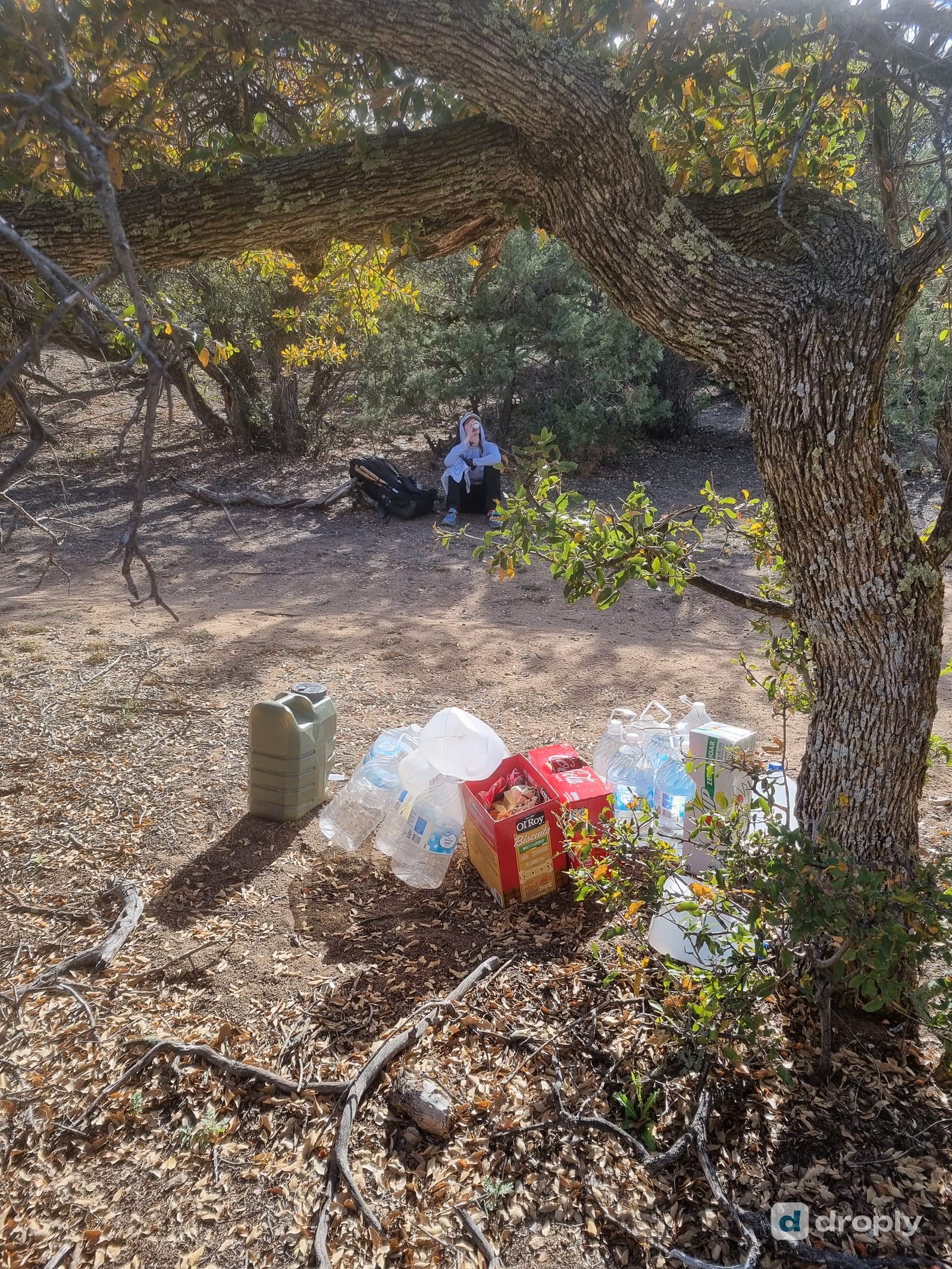
Summary: Two to three litres worked for me on the CDT once I planned around real gaps instead of fear. The specific numbers are trail-specific; the planning method behind them isn’t.
Making water safe to drink
Finding water and making it safe to drink are two separate problems, and solving the first one doesn’t solve the second. Once you’ve found a source, treatment options include hollow-fiber squeeze filters for bacteria and protozoa, chemical treatment like chlorine dioxide as a lightweight backup, and UV treatment in some setups. Every method has limits: standard filters don’t remove viruses reliably, and none of the common backpacking methods touch dissolved chemical contaminants like heavy metals or PFAS.
I go through the actual gear, flow rates and failure modes I dealt with over five months on trail in the hiking water filter guide.
Summary: Treatment handles biological risk, mainly, not every possible contamination issue. Carry a primary method and a lightweight backup.
Pre-hike water planning checklist
Hydration
- Know your rough personal consumption range for the conditions.
- Account for heat and exertion, not just distance.
- Don’t force more water than you need.
Route
- Map every water source along the route.
- Check for recent reports, not just whether a source is marked.
- Identify the longest dry stretch.
- Identify backup sources for the ones you’re relying on.
Safety
- Carry a margin sized to heat, terrain and source uncertainty.
- Bring a treatment method, and a lightweight backup.
- Don’t assume clear water is safe, snowmelt included.
- Know the early signs of dehydration and heat illness.
- Know that drinking too much is also a real risk.
Frequently asked questions
How much water should I carry when hiking?
Enough to cover your expected consumption during the longest dry stretch on your route, plus a safety margin, not enough for the entire hike. A 30 km hike with water every 5 km can need less carried water than a 15 km hike with no source at all. Map the sources, find the longest reliable gap, and size your carry to that gap.
Is 2 litres enough water for a hike?
It depends entirely on the longest dry stretch and the heat, not on a fixed rule. Two litres was a typical carry for many stretches of the CDT once I planned around actual gaps between sources, but that number came from that trail’s specific water spacing and my own consumption. A hike with a 15 km dry stretch in high heat needs more; a route with water every few kilometers needs less.
What is the biggest danger of not drinking enough water while hiking?
Dehydration reduces your body’s ability to regulate temperature, which raises the risk of heat exhaustion and, in severe cases, heat stroke: a medical emergency. Early signs are thirst, headache, fatigue and dizziness. In remote terrain, dehydration is more dangerous because help and water can both be far away.
Can you drink too much water while hiking?
Yes. Drinking more fluid than your body can excrete dilutes blood sodium and causes exercise-associated hyponatremia (EAH), a condition that can range from headache and nausea to seizures and, in severe cases, death. It is a real risk documented in hikers, not just endurance athletes. More water is not automatically safer.
Is it safe to drink melted snow while hiking?
Not automatically. Snow can accumulate environmental contaminants, including PFAS, persistent chemicals that don’t break down naturally and have been measured in snow even at remote, high-elevation sites far from any obvious source. Clear and cold doesn’t mean chemically pure. Standard backpacking filters remove bacteria and protozoa, not PFAS, which needs specialized treatment like activated carbon or reverse osmosis. If a known reliable source is available, don’t assume snowmelt is automatically the better choice just because it looks pristine.
Does a water filter make any water source safe to drink?
No. A standard hollow-fiber backpacking filter removes bacteria and protozoa, the main biological risks in most backcountry water. It doesn’t remove dissolved chemical contaminants like heavy metals from old mine runoff or PFAS. Finding water and making it biologically safe are one problem; chemical contamination is a separate one a filter doesn’t solve.
How can droply help me plan water for a hike?
The droply Water Navigator shows the water sources along a route, with distances between them and recent flow reports, so you can see the longest gap before you leave. Instead of guessing at a total for the whole hike, you can size what you carry to the actual longest dry stretch, and know where the backup sources are if one turns out dry.
Conclusion
Too little water is dangerous. Too much is dangerous too. And the clearest, most pristine-looking water isn’t necessarily the safest to drink.
The smartest way to cut pack weight isn’t to carry more water for a worst case that probably won’t happen. It’s to know where your next reliable water source actually is. Don’t plan for the whole hike: plan for your longest dry stretch, and check it against real information before you go.
Planning your next hike’s water? Explore the droply Water Navigator and see the sources along your route before you need them.
Sources
- Bennett BL, Hew-Butler T, Rosner MH, Myers T, Lipman GS. Wilderness Medical Society Clinical Practice Guidelines for the Management of Exercise-Associated Hyponatremia: 2019 Update. Wilderness & Environmental Medicine, 2020.
- Eifling KP, Gaudio FG, Dumke C, et al. Wilderness Medical Society Clinical Practice Guidelines for the Prevention and Treatment of Heat Illness: 2024 Update. Wilderness & Environmental Medicine, 2024.
- CDC. Heat-Related Illnesses.
- American College of Sports Medicine. Exercise and Fluid Replacement, position stand.
- Kwok H, et al. Sources and Seasonal Variations of Per- and Polyfluoroalkyl Substances (PFAS) in Surface Snow in the Arctic. Environmental Science & Technology, 2024.
- US EPA. Reducing PFAS in Drinking Water with Treatment Technologies.
- CDC. Water Treatment Options When Hiking, Camping, or Traveling.
Frequently asked questions
How much water should I carry when hiking?
Enough to cover your expected consumption during the longest dry stretch on your route, plus a safety margin, not enough for the entire hike. A 30 km hike with water every 5 km can need less carried water than a 15 km hike with no source at all. Map the sources, find the longest reliable gap, and size your carry to that gap.
Is 2 litres enough water for a hike?
It depends entirely on the longest dry stretch and the heat, not on a fixed rule. Two litres was a typical carry for many stretches of the CDT once I planned around actual gaps between sources, but that number came from that trail's specific water spacing and my own consumption. A hike with a 15 km dry stretch in high heat needs more; a route with water every few kilometers needs less.
What is the biggest danger of not drinking enough water while hiking?
Dehydration reduces your body's ability to regulate temperature, which raises the risk of heat exhaustion and, in severe cases, heat stroke: a medical emergency. Early signs are thirst, headache, fatigue and dizziness. In remote terrain, dehydration is more dangerous because help and water can both be far away.
Can you drink too much water while hiking?
Yes. Drinking more fluid than your body can excrete dilutes blood sodium and causes exercise-associated hyponatremia (EAH), a condition that can range from headache and nausea to seizures and, in severe cases, death. It is a real risk documented in hikers, not just endurance athletes. More water is not automatically safer.
Is it safe to drink melted snow while hiking?
Not automatically. Snow can accumulate environmental contaminants, including PFAS, persistent chemicals that don't break down naturally and have been measured in snow even at remote, high-elevation sites far from any obvious source. Clear and cold doesn't mean chemically pure. Standard backpacking filters remove bacteria and protozoa, not PFAS, which needs specialized treatment like activated carbon or reverse osmosis. If a known reliable source is available, don't assume snowmelt is automatically the better choice just because it looks pristine.
Does a water filter make any water source safe to drink?
No. A standard hollow-fiber backpacking filter removes bacteria and protozoa, the main biological risks in most backcountry water. It doesn't remove dissolved chemical contaminants like heavy metals from old mine runoff or PFAS. Finding water and making it biologically safe are one problem; chemical contamination is a separate one a filter doesn't solve.
How can droply help me plan water for a hike?
The droply Water Navigator shows the water sources along a route, with distances between them and recent flow reports, so you can see the longest gap before you leave. Instead of guessing at a total for the whole hike, you can size what you carry to the actual longest dry stretch, and know where the backup sources are if one turns out dry.
Published on
← Back to blog  By Micha · Co-Founder, droply
CDT thru-hiker (2024) · Co-founder of droply
Micha co-founded droply after thru-hiking the Continental Divide Trail in 2024. A former scout and lifelong outdoor enthusiast, he's always chasing water sources to map: hidden natural springs and hot springs are his favorites.
Get new posts in your reader
New guides and trail notes land in your feed reader the day they're published. No email address, no account, no tracking.
Feed address
https://droply-app.com/rss.xml