


· Micha
Drinking Water in Zurich: Fountains, Spring Water and Emergency Water
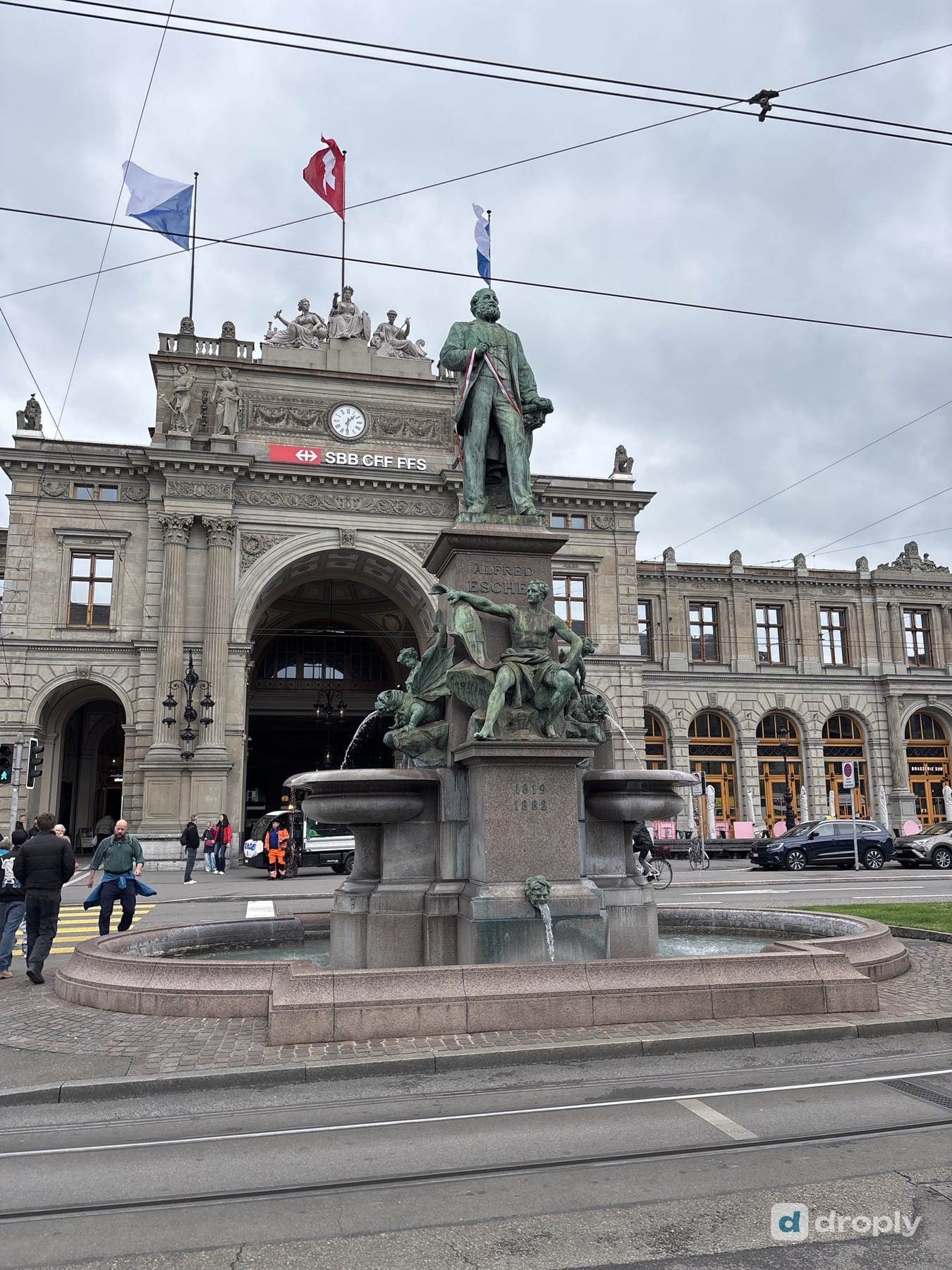
Zurich has over 1200 public fountains, its own spring-water network, and more than 80 emergency fountains. A guide to finding water reliably and planning a hike around it.
Zurich isn’t just a city with a lot of drinking fountains. It draws on several different water resources and runs its own spring-water network, independent from the rest of the grid, that also carries the city’s emergency water supply. droply was built by two Swiss founders who know Zurich and the Swiss outdoors first-hand, so here’s where you can reliably find water in the city, and what’s actually behind its different kinds of fountains.
Where can you find drinking water in Zurich?
At the nearest public fountain: Zurich has over 1200 of them, spread across the whole city, from the old town to the outskirts. The highest density sits around Bahnhofstrasse, Niederdorf and the lakeside promenades, where you’ll rarely walk two blocks without passing a running one.
The droply map shows every fountain we’ve mapped, together with the official Zurich data and any community notes if someone on the ground has spotted something different. That’s most useful outside the dense city center, on the outskirts or on a hike: instead of hunting for fountains yourself, you plan straight off the map or your route.
Summary: Zurich has over 1200 public fountains, dense downtown and thinner at the edges. droply shows them on the map, including status.
Over 1200 fountains — why Zurich has so much water infrastructure
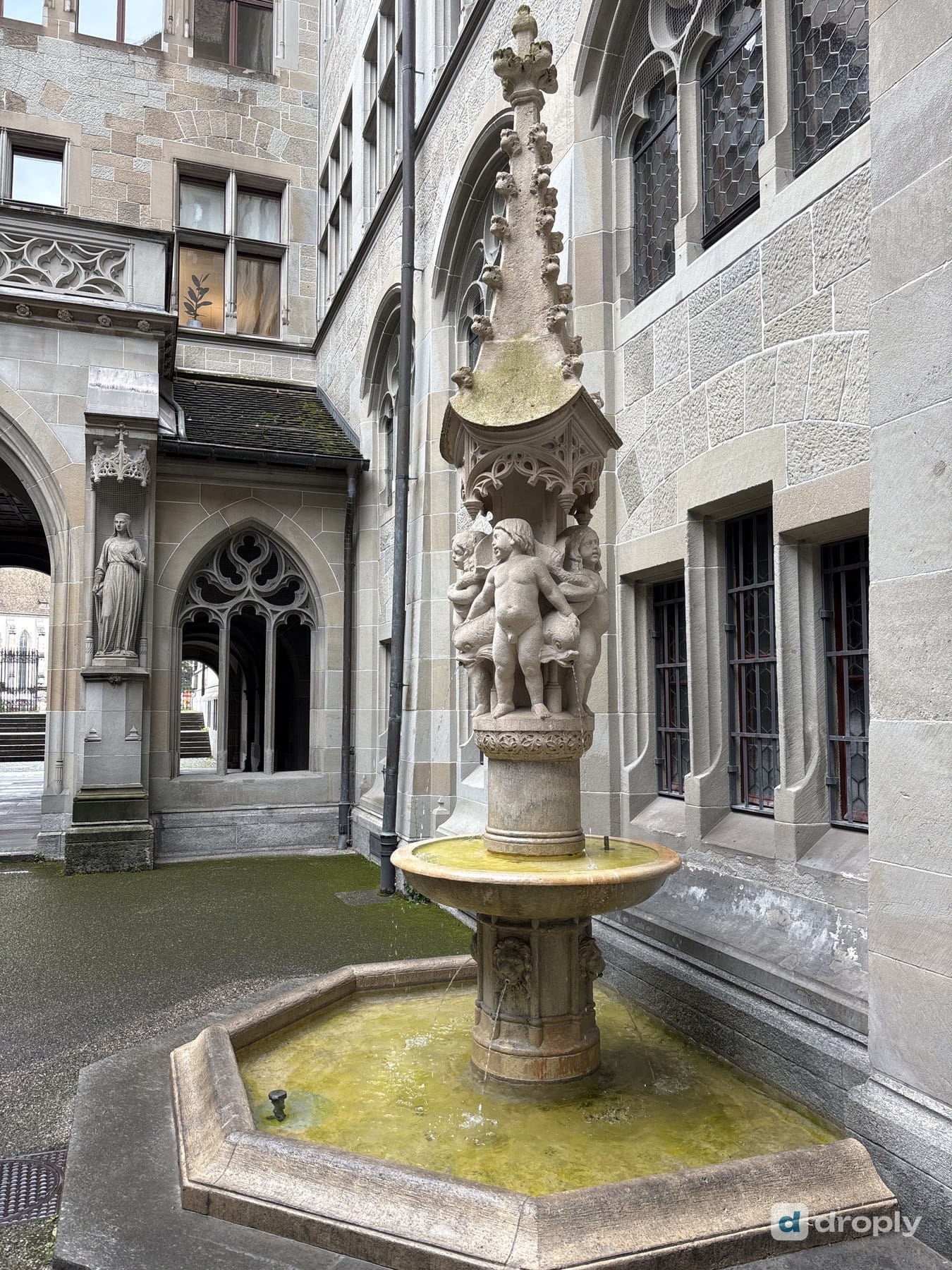
The City of Zurich itself counts over 1200 public fountains. That’s not pure decoration: historically, fountains supplied whole neighborhoods with drinking water before every house had its own connection, and many of today’s fountains still stand at those same historic spots.
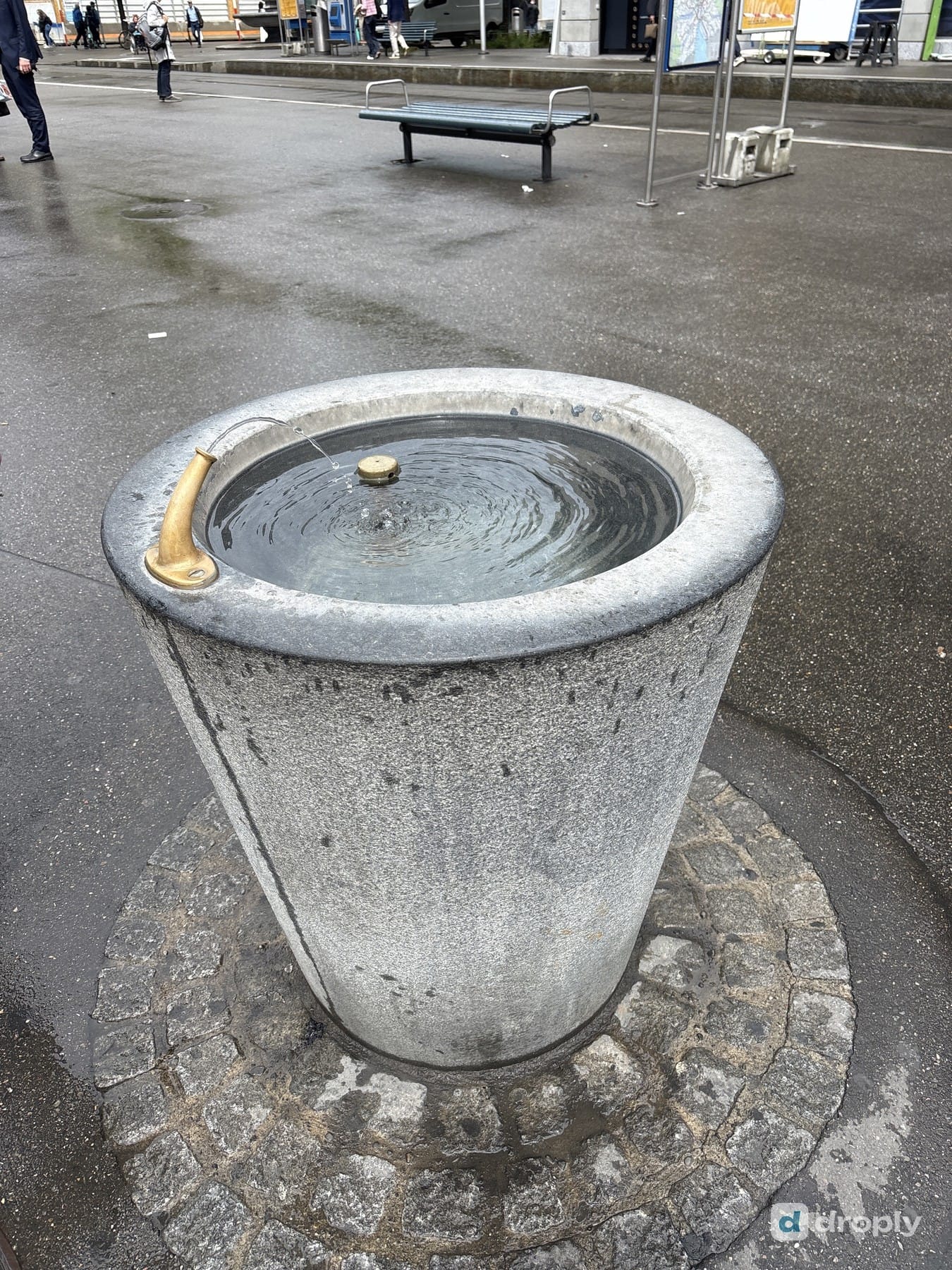
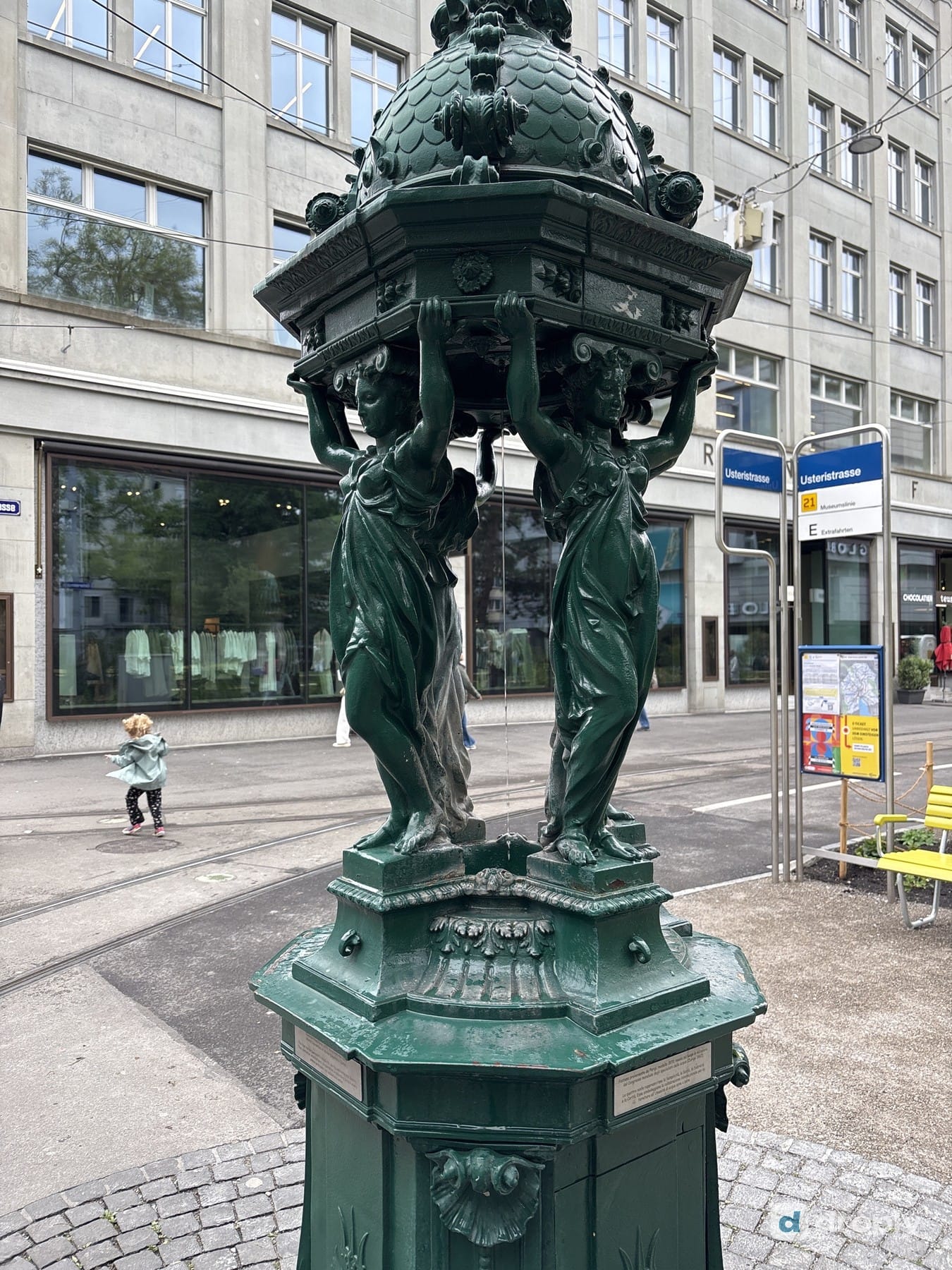
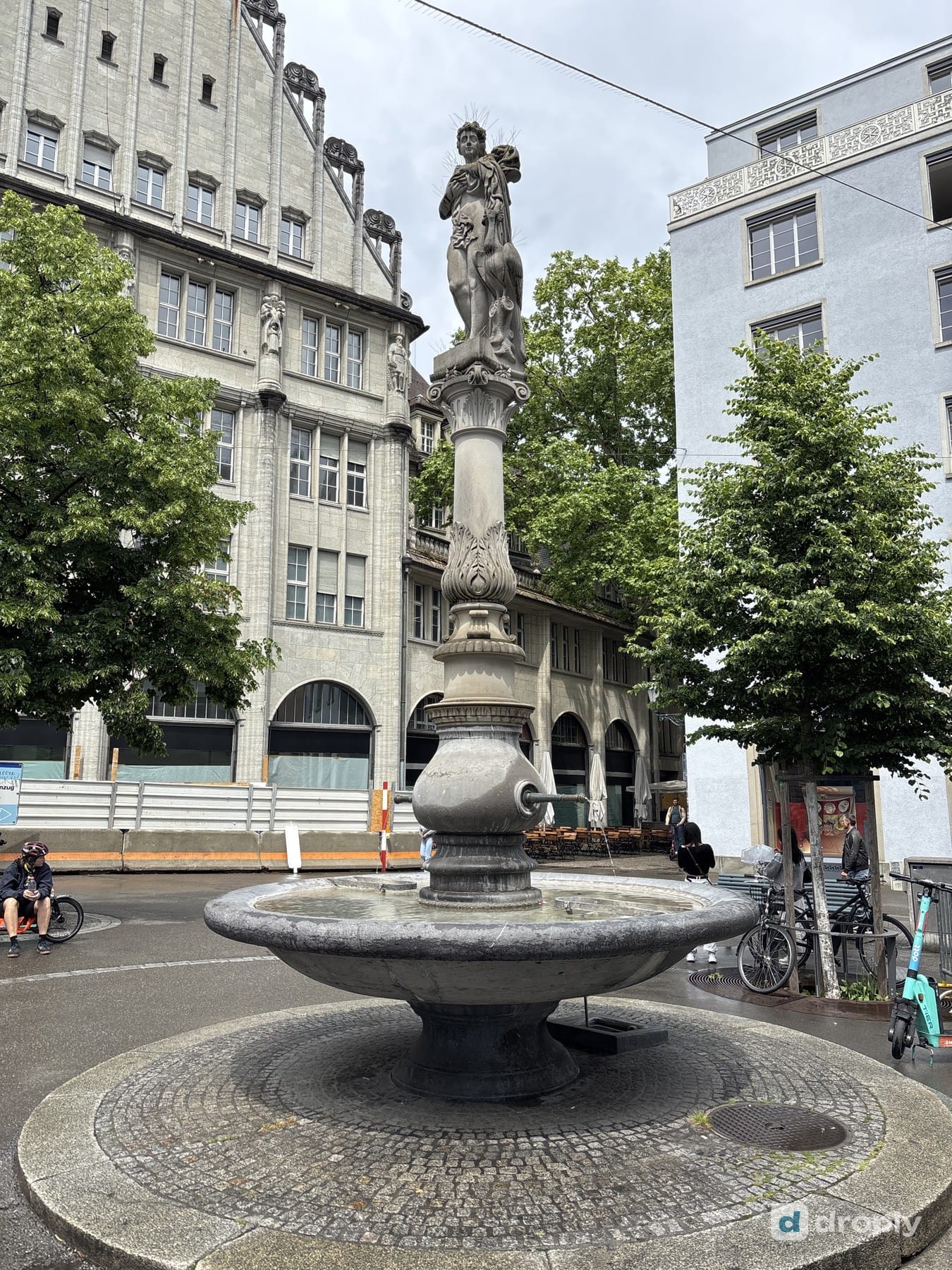
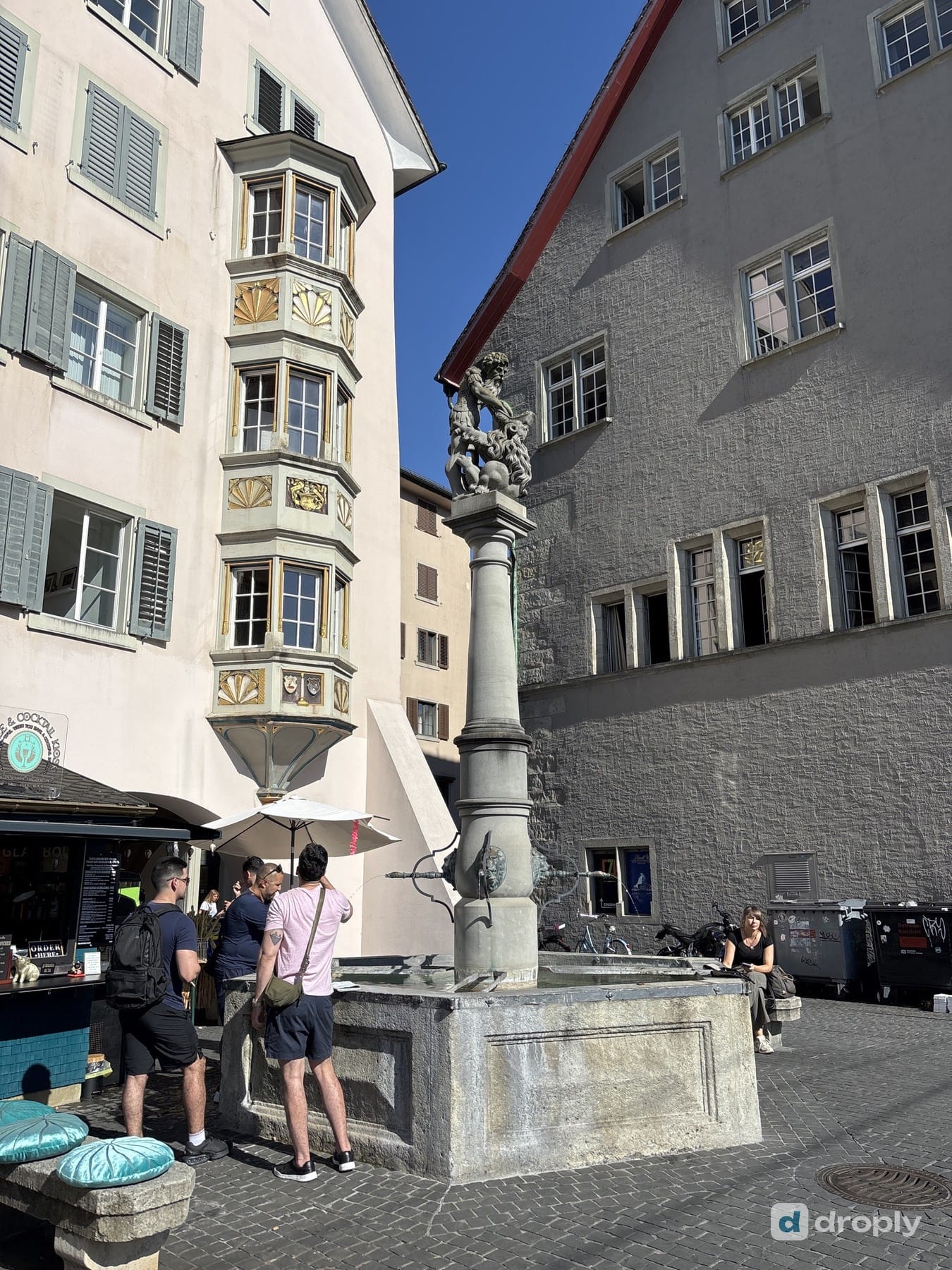
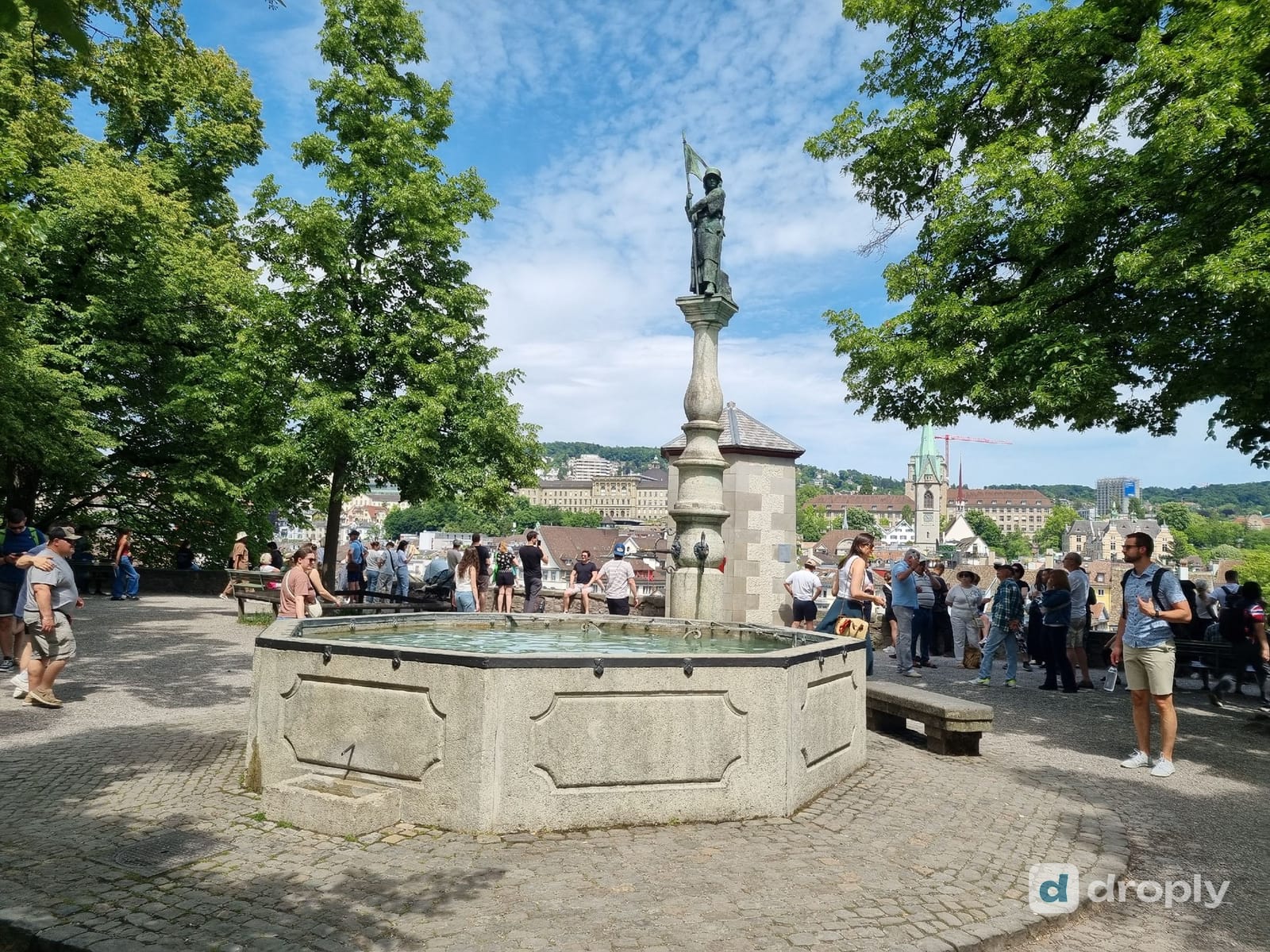
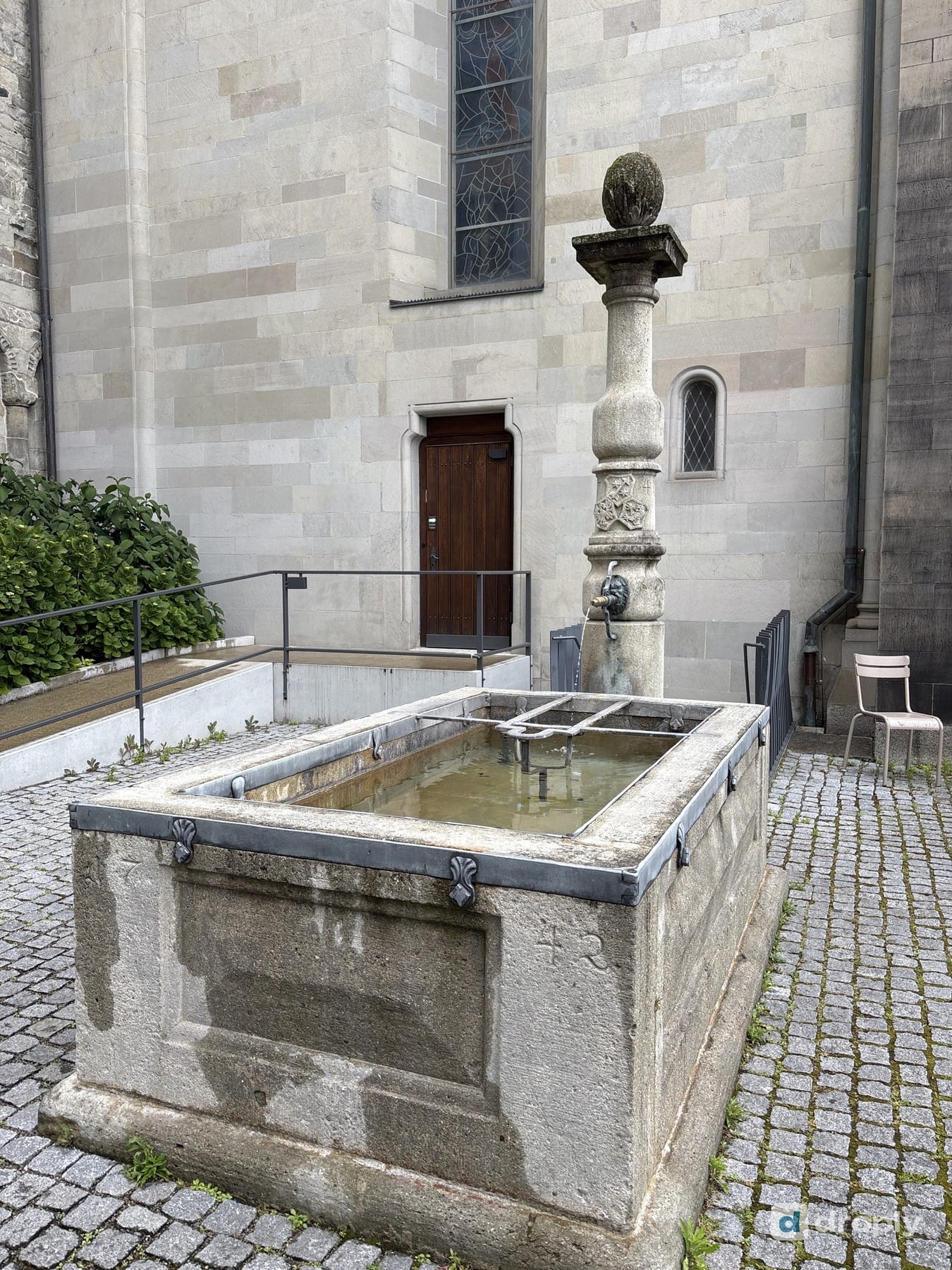
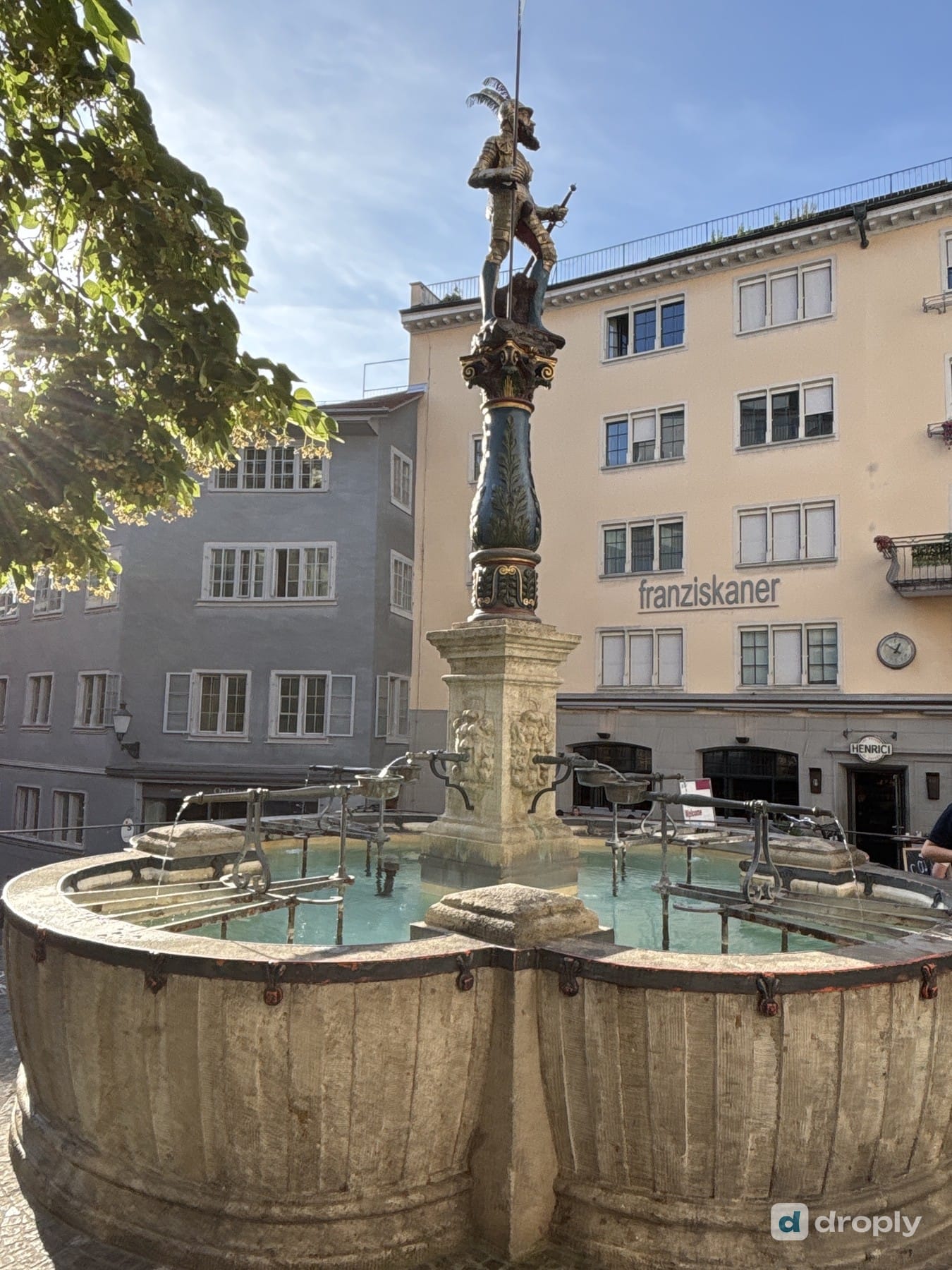
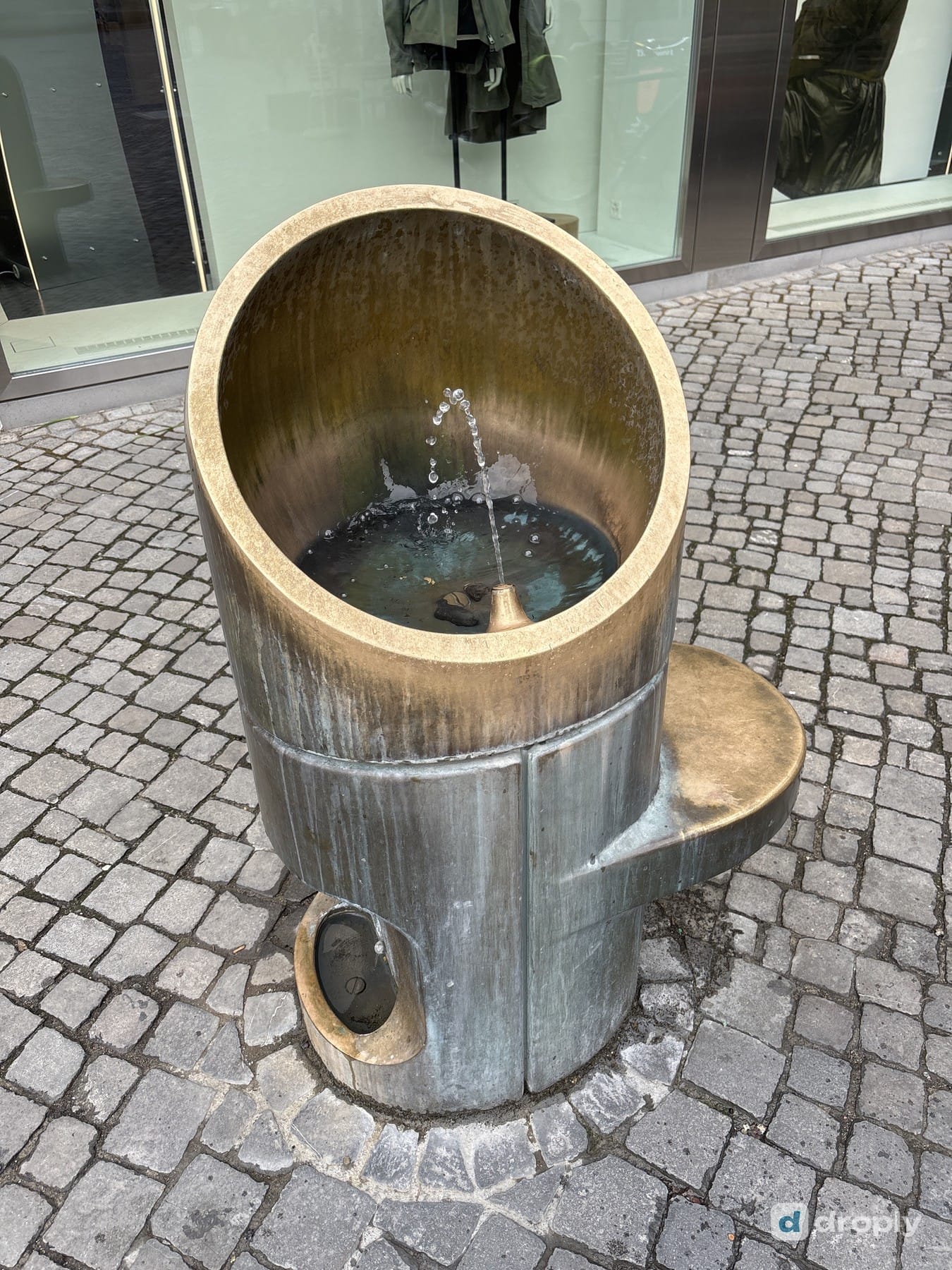
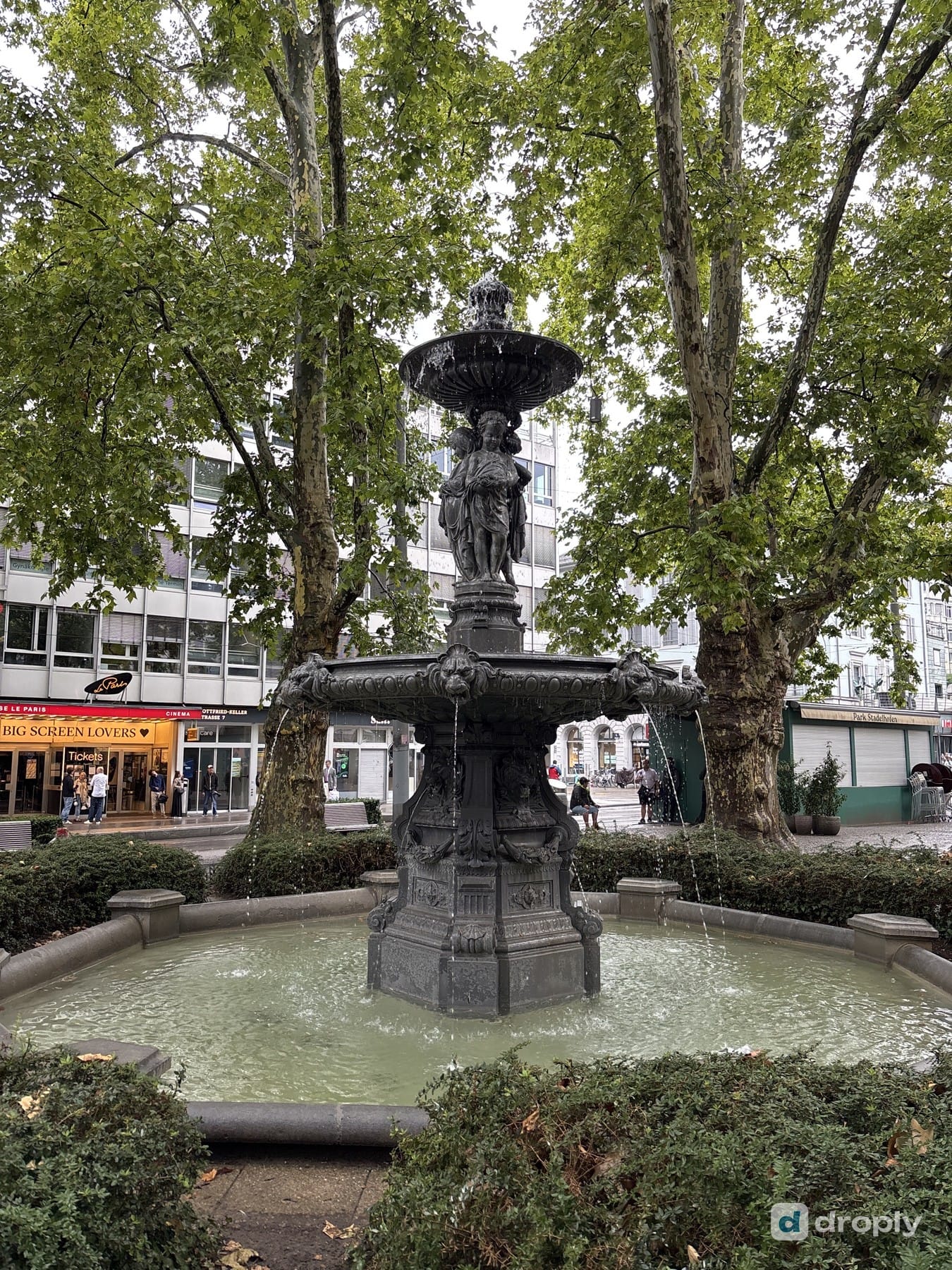
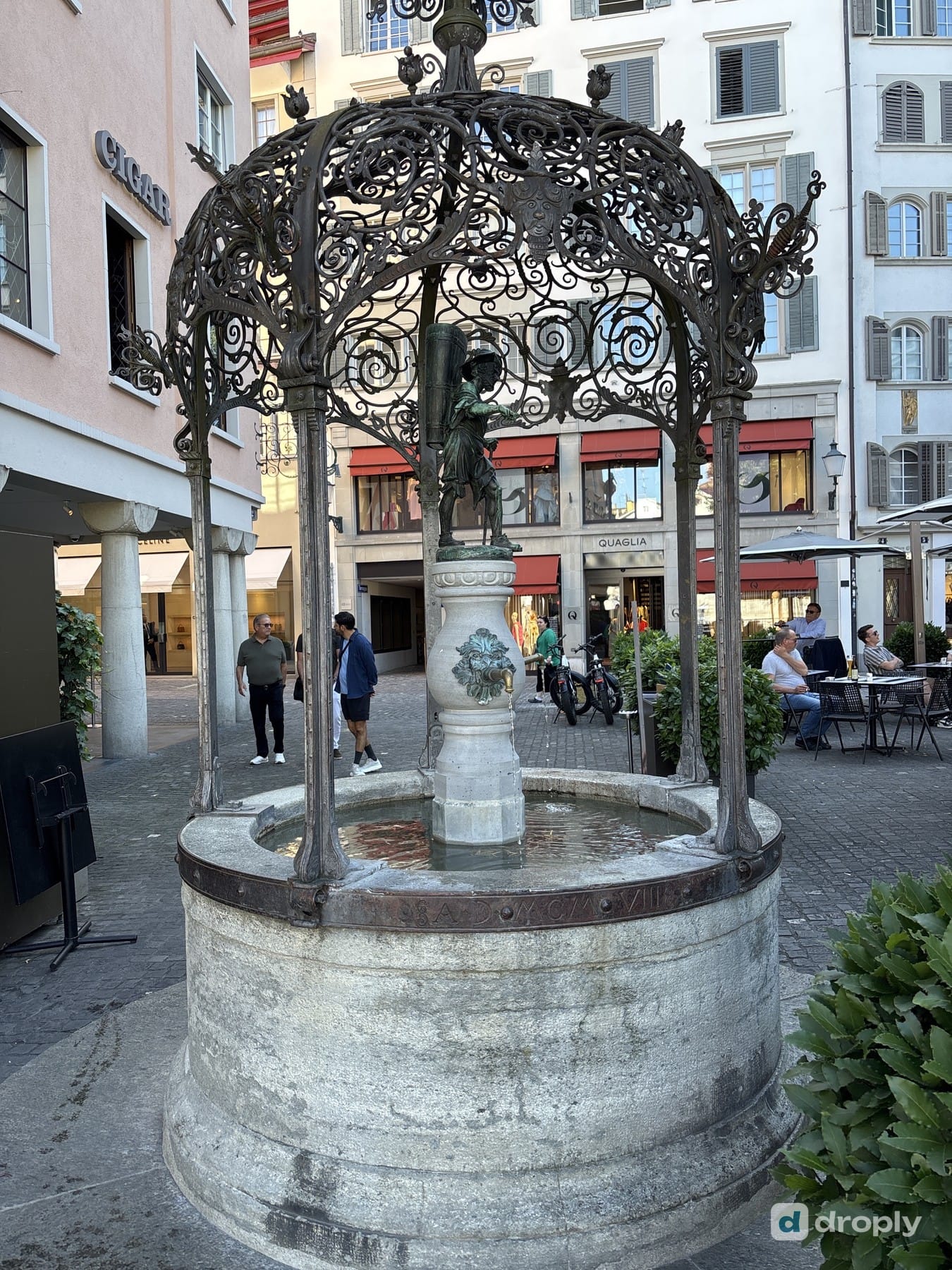
Not every fountain is the same. Some are plain stone troughs, others elaborate figure fountains from the 16th to 19th century with guild crests or statues, and others modern stainless-steel or concrete fountains from recent decades. What connects them: most carry drinking water and are publicly accessible, no matter how old or ornate they are.
If you’re curious about the history behind them rather than just topping up on the go, Zurich Tourism runs the Wasserstadt Zürich guided tour: a roughly two-hour walk to medieval well fountains, the city’s first water pipeline, and its public lakeside baths, led by a licensed city guide (booked through the German-language page; English tour dates are listed separately on their site).
Summary: Over 1200 fountains in very different building styles shape Zurich’s streetscape, historic and modern alike, most of them carrying drinking water. An official guided tour goes deeper into the history.
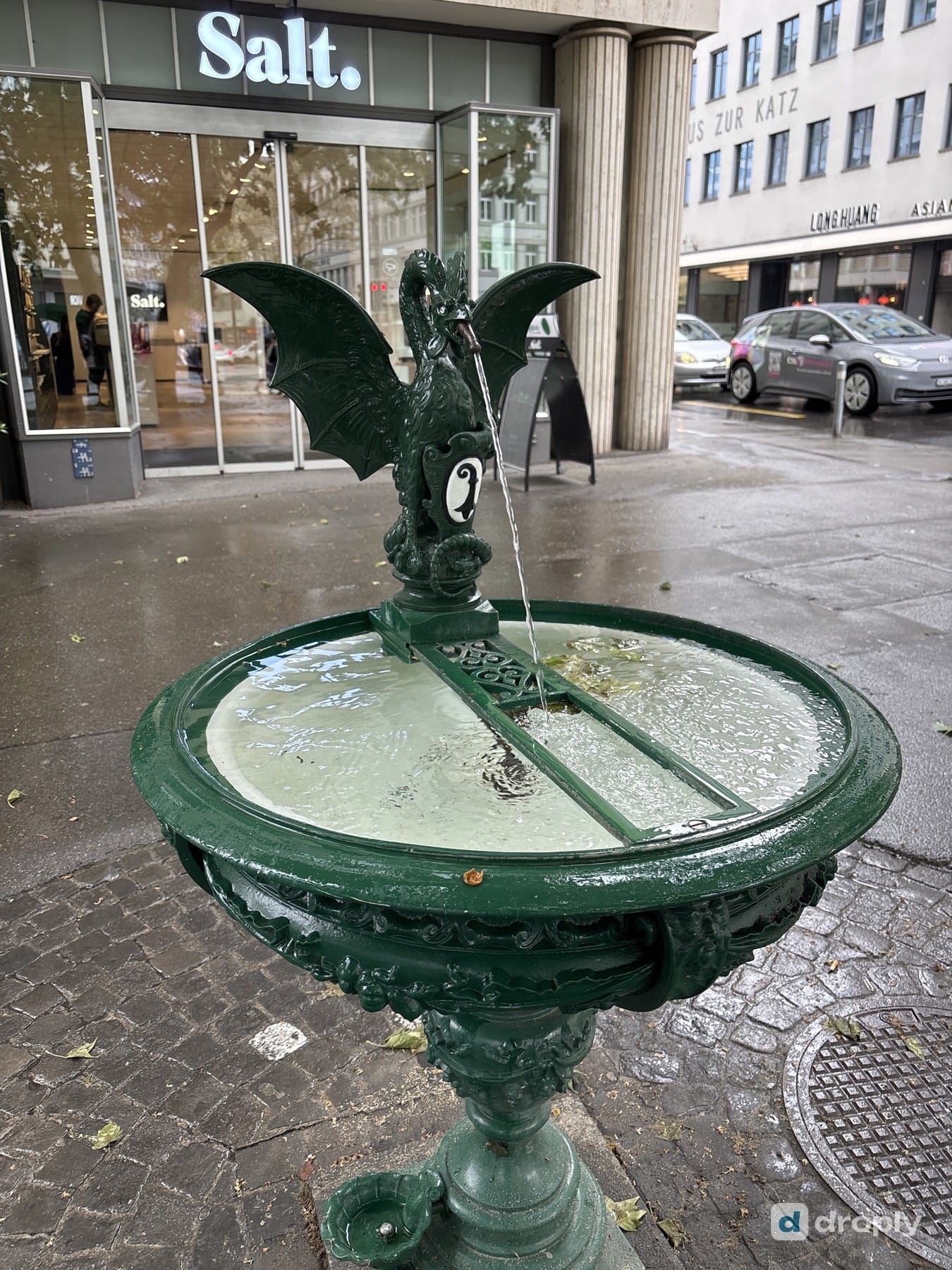
Where does the water in Zurich’s fountains come from?
Zurich’s drinking water comes from three resources: lake water, groundwater and spring water. According to the City of Zurich, the network today carries about 70% treated water from Lake Zurich, plus 15% each of groundwater and spring water.
That split describes where the drinking water comes from overall, not which water an individual fountain carries. Most fountains sit on the regular water mains and get that usual mix of lake, ground and spring water. A smaller group is instead connected directly to the separate spring-water network, more on that in the next section.
Summary: Zurich’s drinking water is 70% lake water plus 15% each groundwater and spring water. That’s the water’s origin, not automatically which category a given fountain belongs to.
Spring water or the regular mains — what’s the difference?
Some of Zurich’s fountains aren’t connected to the regular water mains at all, but to a separate spring-water network. According to the City of Zurich, this runs about 150 km and today supplies roughly 320 fountains, mostly historic old-town ones, plus every emergency fountain.
What makes it different: because many of the feeding springs, in the Sihl and Lorze valleys and around the city, sit higher than the fountains they supply, most of the water flows downhill by gravity, without pumps. That’s what keeps this network running during a power outage too, a point that matters in the next section on emergency water.
In droply, we mark fountains connected to the spring-water network with their own icon, so you can see at a glance whether a fountain runs on the regular mains or the city’s independent spring-water network.
Summary: Around 320 Zurich fountains run on the city’s own, roughly 150 km spring-water network, mostly gravity-fed and so still working during a power outage. droply marks these with their own icon.
How do you know if a Zurich fountain is currently running?
Most reliably from the City of Zurich’s official status. The city’s open-data fountain dataset includes, among other things, whether a fountain is currently shut off and, if so, why, for example maintenance or a winter shutdown.
droply imports this data regularly, currently every 14 days, and shows you the last known status right in the app. That’s not a live status straight from the city, but a periodically refreshed import, supplemented with community notes when someone on the ground sees something different from the last import. It’s not an absolute guarantee, but it’s normally enough for everyday planning.
Summary: The city’s official status tells you whether a fountain is running. droply imports it every 14 days and adds community notes, without being live.
Emergency fountains in Zurich — water in a crisis
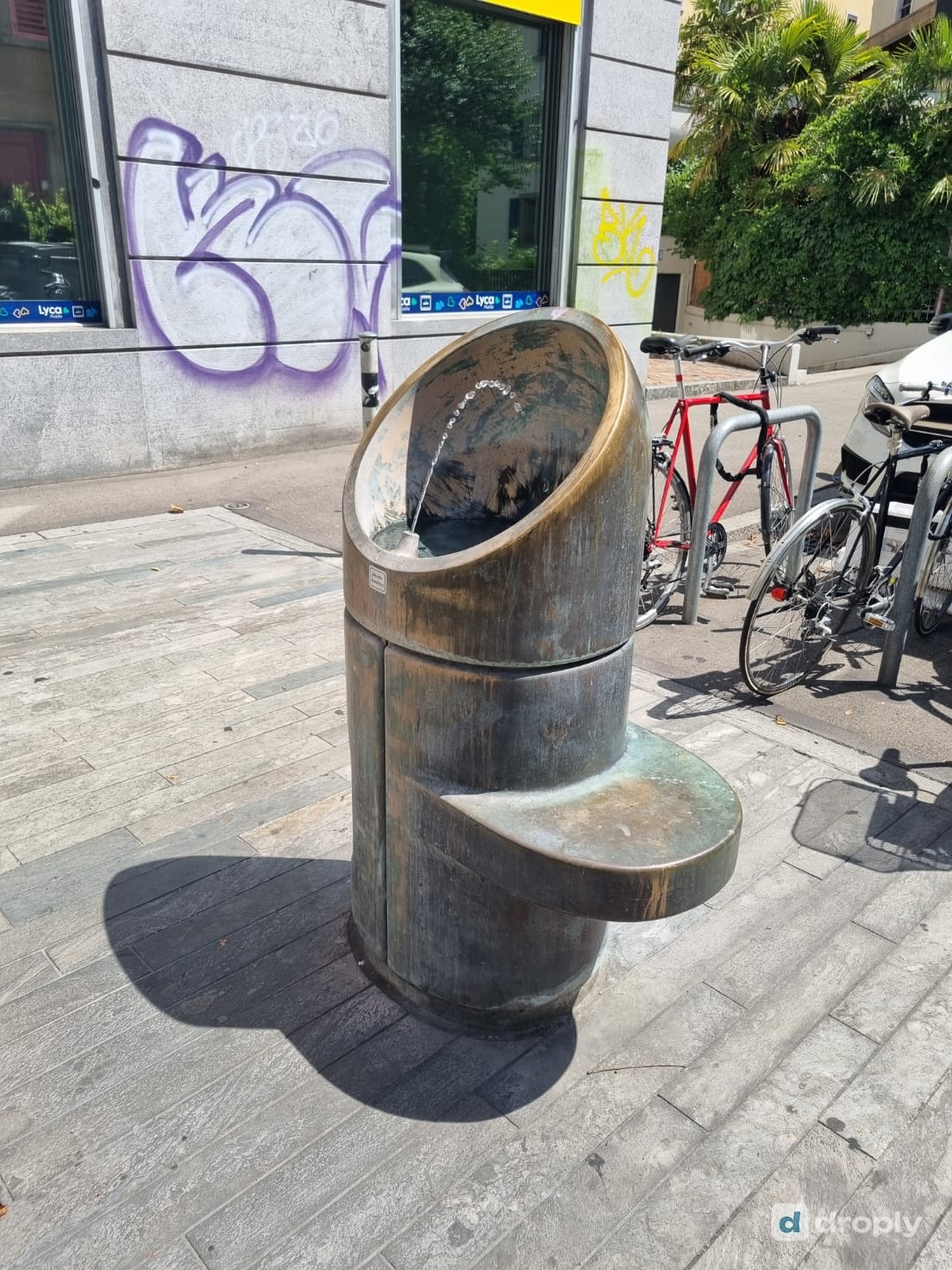
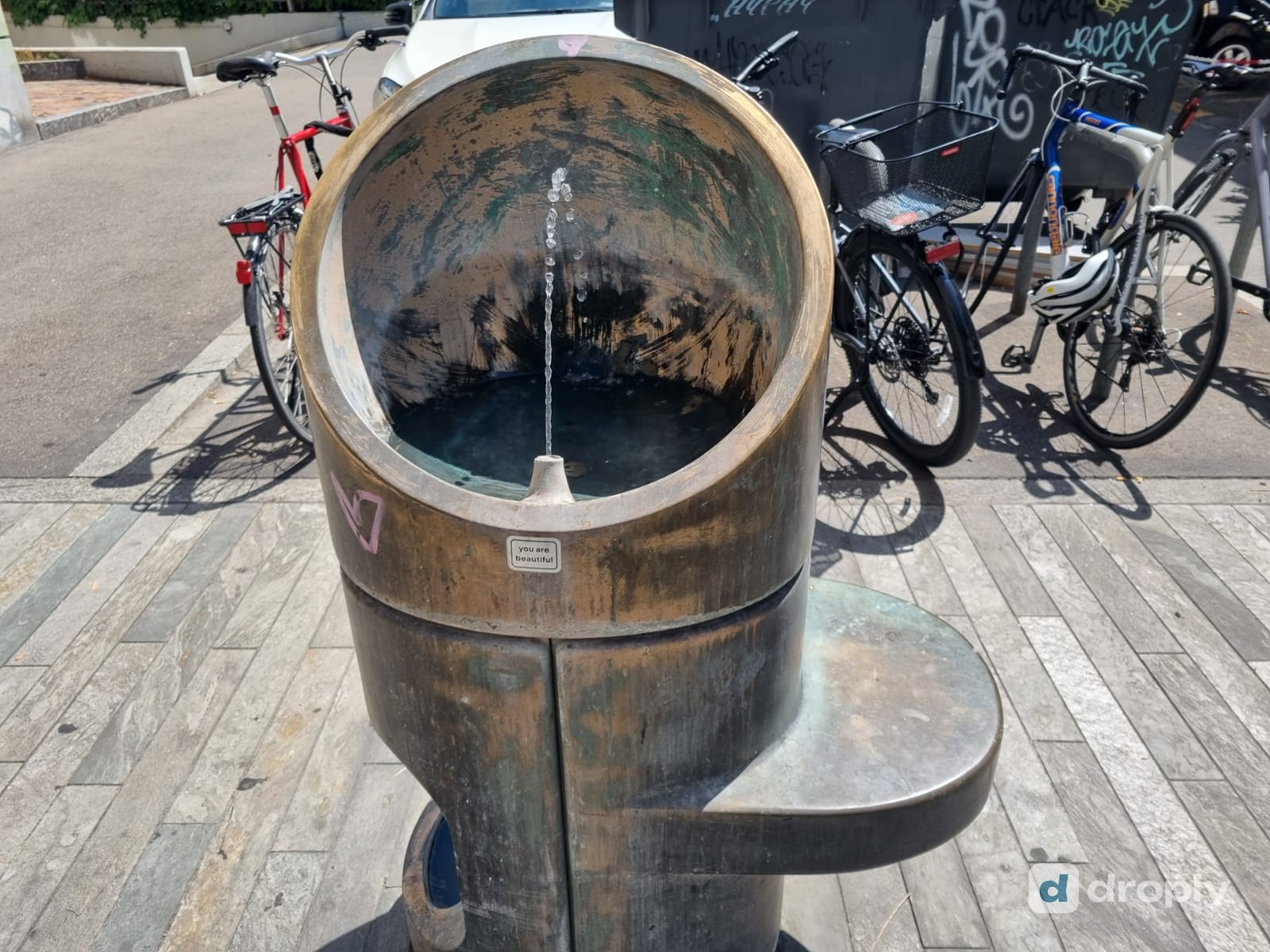
Zurich has over 80 emergency fountains, purpose-built drinking fountains that are part of the city’s emergency water supply. The city has installed them across the whole urban area since 1976, independent of the regular water supply.
Like the roughly 320 other spring-water fountains, emergency fountains run on the separate spring-water network. Because that network is mostly gravity-fed, it stays operational even during a disruption to the normal water supply or a power outage. In an actual emergency, these fountains can be fitted with a special distribution unit that lets several people draw water at once.
What matters day to day: in normal operation, emergency fountains are perfectly ordinary drinking fountains. The special distribution unit only comes into use in a genuine crisis, not as part of everyday city operations. You can drink from them or fill your bottle any time, just like at any other fountain.
Summary: Over 80 emergency fountains back up Zurich’s water supply during a crisis, running on the independent spring-water network. Day to day, they work like normal drinking fountains.
Drinking water while hiking around Zurich
Plan a hike not just by distance, but by water sources and the dry stretches between them. Around Zurich, that often means: in the city and at popular destinations like Uetliberg, Zürichberg or along the lakeside promenades, fountains are dense, but once you head deeper into the forest or onto longer loops toward Sihlwald, that density drops noticeably.
For a planned route, upload your GPX file to the droply Navigator, and the app searches along the track for known water sources. That way you can see before you start where you can reliably refill and where a longer dry stretch follows, and plan your water accordingly. Exactly how much that means depends on distance, temperature and pace, more on that in our guide to how much water to carry hiking.
Summary: Water is usually close by in the city and at popular destinations, less so on longer forest routes. Load your route into the droply Navigator to see water sources and dry stretches ahead of time.
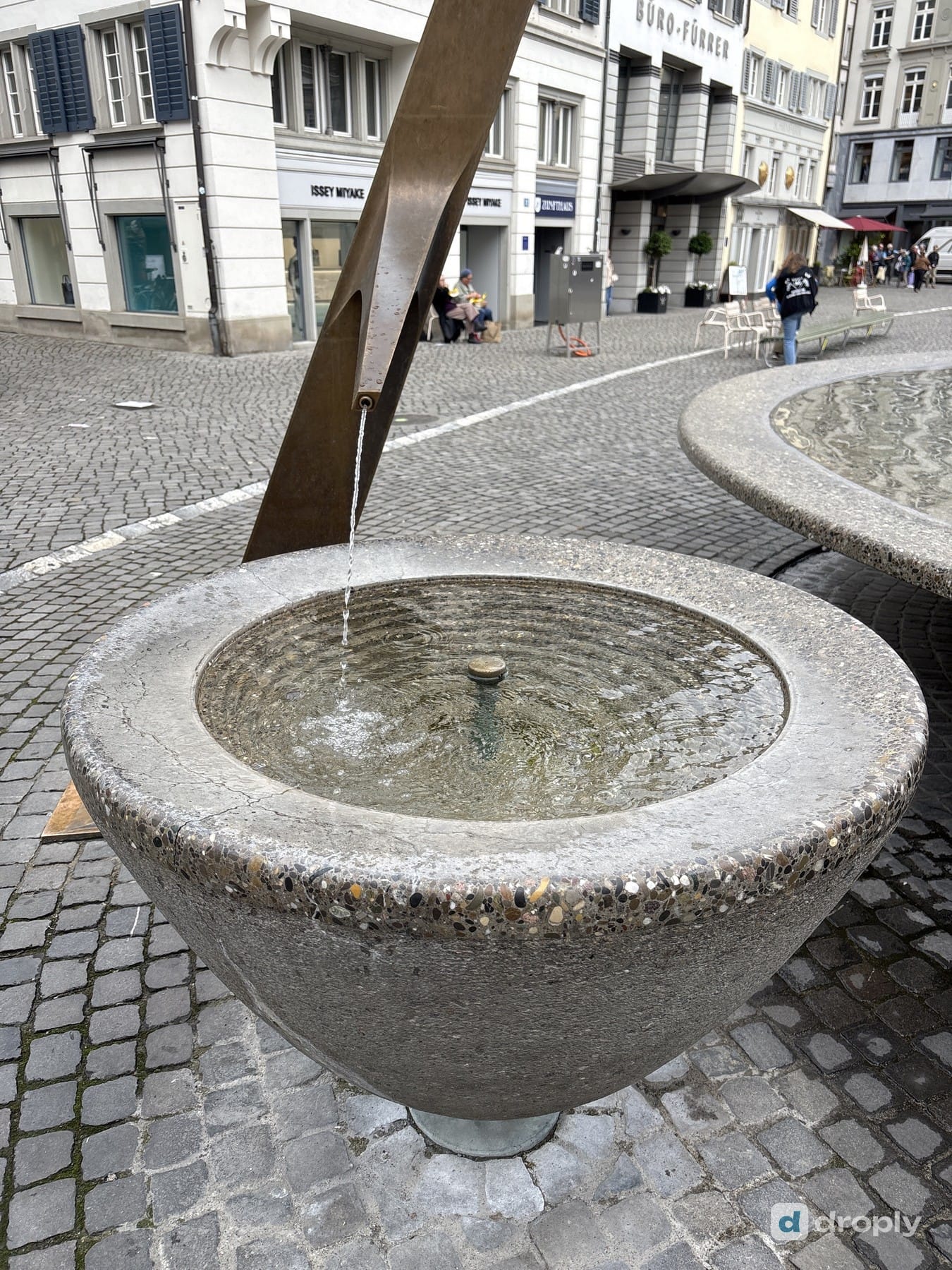
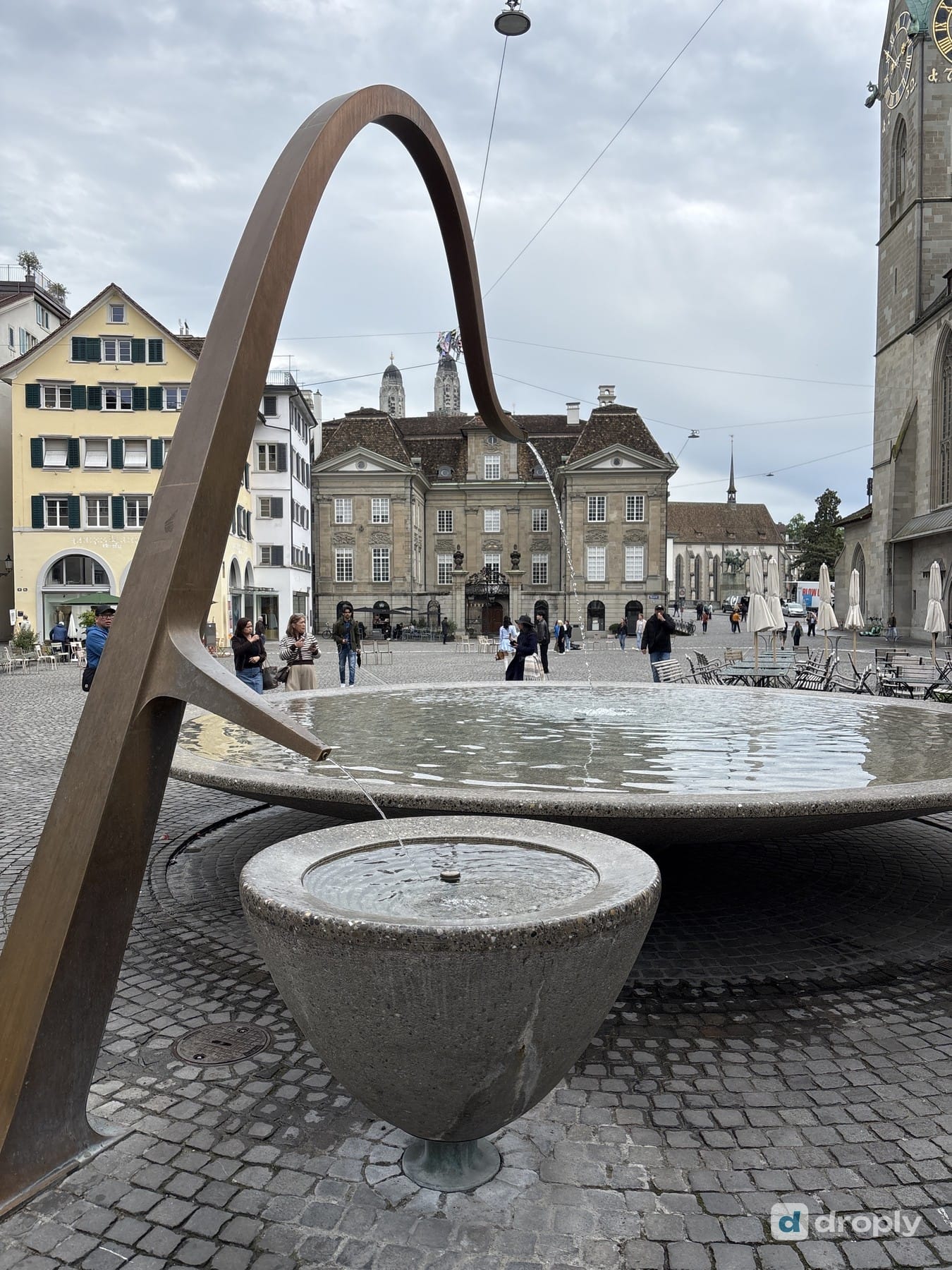
A good starting point for an old-town walk is the Münsterhofbrunnen, with its wide metal arc. For weddings, its basin is sometimes filled with flowers instead of water, a nice surprise if you happen to pass through Münsterhof at the right time.
What to do if a fountain is shut off or dry
Check the status first: in droply you can see whether the City of Zurich’s last known data marks the fountain as shut off, and why, if a reason is given. If a fountain really is dry, look up the next one in the app, usually it’s only a few hundred meters away.
For natural springs and streams outside the city, treat drinkability with caution by default: without treatment, it isn’t guaranteed, even if the water looks clear. For how that plays into your hiking gear, including when a filter’s worth carrying, see our hiking water filter guide and our piece on why filtered mountain water isn’t automatically safe.
Summary: Check the status in droply first and head to the next fountain. Stay cautious about drinkability at natural springs outside the city.
Is fountain water safe to drink in Switzerland generally?
Generally, yes, across the whole of Switzerland, not just Zurich. Cantonal practice holds that unless a publicly accessible fountain is explicitly marked with a sign saying it isn’t drinking water, you can assume it’s safe to drink. The relevant municipality is responsible for operation and water quality, and drinking water is among the most strictly controlled foods in the country.
That applies to city fountains just as much as to many mountain fountains, where individual private owners decide themselves whether to put up the sign. In Zurich, practically all of the city’s 1200-plus public fountains are connected to this system and marked accordingly if they ever don’t carry drinking water.
Summary: Without a sign saying it isn’t drinking water, a public fountain in Switzerland is treated as drinkable. That’s common municipal practice, not a single law, but it holds true nationwide.
Why droply works especially well in Zurich
droply was built by two Swiss founders who know Zurich and the Swiss outdoors first-hand. You can see it in the data: for Zurich, we import the city’s official fountain data directly, supplemented with photos and status reports from the droply community, which is especially active here. For a city with over 1200 fountains, that local focus is the difference between a generic map and one that actually knows what an emergency fountain is. More on the founders’ background is in our droply story.
Frequently asked questions
Where can I find free drinking water in Zurich?
At most of the city's over 1200 public fountains. The vast majority run drinking water, usually easy to tell from location and any signage. The droply map also shows whether a fountain is currently running, based on the city's official data.
Where can I refill my water bottle in Zurich?
At any running fountain you find in the old town, on central squares like Bahnhofplatz or Paradeplatz, or along the way on a hike. For a planned route, the droply Navigator shows you the water sources along the track in advance.
How many fountains does Zurich have?
Over 1200, according to the City of Zurich. About 800 of those are on the regular drinking-water network, roughly 320 more on the separate spring-water network, plus over 80 emergency fountains.
Can you drink from Zurich's fountains?
Almost always, yes: most carry official drinking water. Exceptions are a few purely decorative fountains without drinking-water quality, and fountains the city has marked as shut off, for example for maintenance or winter shutdown. When in doubt, check the fountain's own signage or the status shown in droply.
What does spring water mean for a Zurich fountain?
It means the fountain isn't connected to the regular water mains but to the city's separate spring-water network, fed by springs in the Sihl and Lorze valleys plus municipal springs, and running mostly by gravity.
What is the spring-water network in Zurich?
A roughly 150 km piping system, independent of the rest of the water network, that supplies around 320 fountains plus every emergency fountain. Because many springs sit higher than the city, most of the water flows downhill by gravity, which keeps the network working even during a power outage.
What are emergency fountains (Notwasserbrunnen) in Zurich?
Purpose-built drinking fountains that are part of the city's emergency water supply. They run on the spring-water network and can be fitted with a special distribution unit during an actual emergency, for example a disruption to the normal water supply. Day to day, they work like any other drinking fountain.
How many emergency fountains does Zurich have?
Over 80, spread across the whole city. They've been installed specifically for emergency water supply since 1976, alongside the roughly 320 other fountains on the spring-water network.
How do I know if a fountain in Zurich is currently running?
The City of Zurich maintains an open dataset with each fountain's status, including the reason for any shutdown. droply imports this data regularly, currently every 14 days, and shows the last known status right on the map, supplemented with hints from the community.
How do I plan water for a hike around Zurich?
Upload your route as a GPX file to the droply Navigator, and the app shows you the known water sources along the track, plus distances and dry stretches between them. That way you know before you start how much water to carry for each section.
Is tap water safe to drink in Switzerland?
Yes. Swiss tap water is one of the most strictly controlled foods in the country, and most fountains connected to that network carry the same quality. That applies to Zurich as much as to the rest of Switzerland.
Do I have to pay for water in Swiss restaurants?
Usually, yes. Unlike in some countries, tap water isn't automatically served for free in Swiss restaurants, a carafe or bottle often costs several francs. The nearest public fountain is the free alternative if you're carrying your own bottle.
How expensive is a bottle of water in Switzerland?
Often well under a franc a litre in a supermarket, more like 3 to 9 francs a bottle at a kiosk, train station or public-pool kiosk. Water from a fountain costs nothing: bring your own bottle and use droply to find the nearest running one.
Is fountain water drinkable all over Switzerland, not just in Zurich?
Yes, as common practice nationwide: unless a public fountain is explicitly marked as not drinking water, it's presumed drinkable. The local municipality is responsible. That holds in cities and mountains alike, even without one single national law spelling it out.
How do I recognize a Swiss fountain that isn't drinking water?
By a sign at the fountain itself, usually saying it's not drinking water. Without that sign, you can assume the water is drinkable. droply also shows the last known status and water type, where that data exists.
Published on
← Back to blog 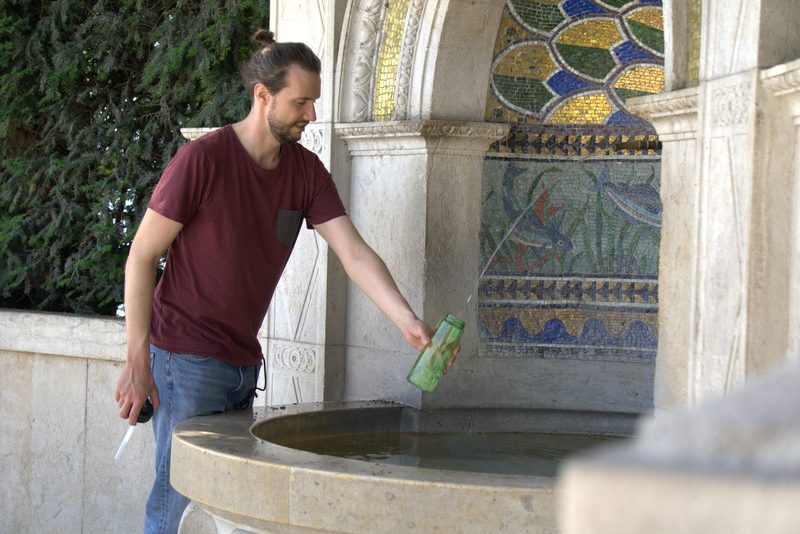 By Micha · Co-Founder, droply
CDT thru-hiker (2024) · Co-founder of droply
Micha co-founded droply after thru-hiking the Continental Divide Trail in 2024. A former scout and lifelong outdoor enthusiast, he's always chasing water sources to map: hidden natural springs and hot springs are his favorites.
Get new posts in your reader
New guides and trail notes land in your feed reader the day they're published. No email address, no account, no tracking.
Feed address
https://droply-app.com/rss.xml